

Preparing your classic car for a summer road trip across Europe – with long motorway stretches and Alpine mountain passes – can be the adventure of a lifetime. But it requires careful preparation to ensure both you and your car make it safely and happily through the journey.
Experienced classic car owners likely know their machines well, but it never hurts to review essential best practices before a big trip. In this (admittedly quite long, but useful!) guide, we’ll cover everything from engine maintenance for high temperatures and altitudes, to daily driving limits for older cars, to what spare parts to carry, and how to handle breakdowns in the most popular road trip countries, namely France, Germany and Switzerland.
So buckle up and grab a drink, before diving in for some knowledgeable, engaging advice to prepare your beloved classic (and its owner) for the open road!
Engine Maintenance for Hot Weather and High Altitudes
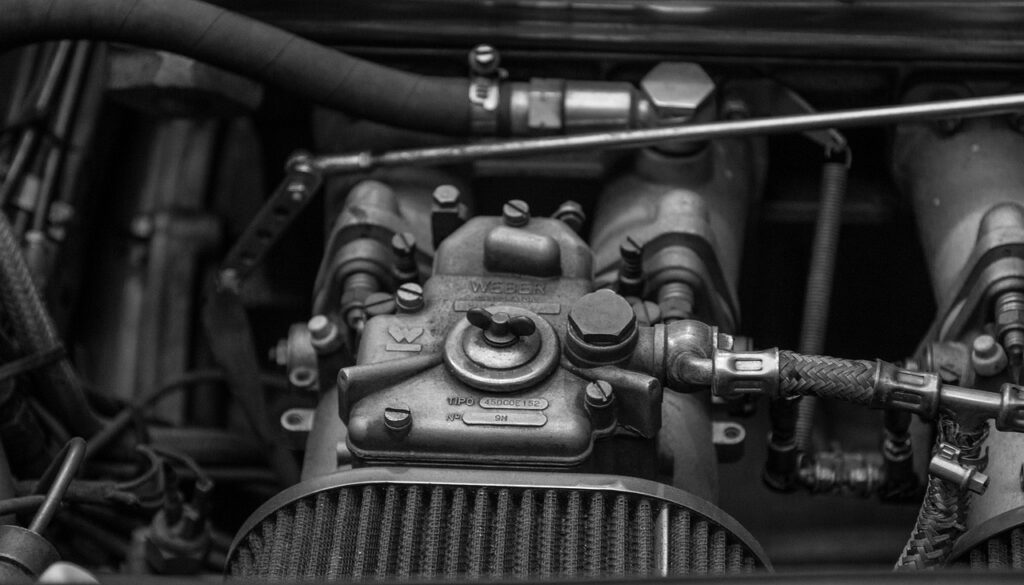
Give your engine some extra love before departure. Summer heat and steep Alpine climbs will put added stress on an older engine, so thorough maintenance is key. Start with the cooling system: ensure there are no leaks, the radiator core is clean (bugs and grime can clog it), hoses are solid (no cracks or bulges), and the fan is working properly (if it has a thermostatic electric fan, verify it kicks in at the correct temperature). Top up your coolant and consider carrying a bottle of premixed coolant or distilled water for emergencies. An extra bottle of engine oil is also wise to bring along, and make sure you’ve recently changed the oil so the engine is running on fresh lubricant. Fresh oil and proper lubrication help the engine run cooler and withstand long high-speed runs.
Next, check that your fuel mixture and ignition timing are tuned correctly. A well-adjusted carburetor or fuel injection will prevent lean running (lean fuel mixtures burn hotter) – you want the engine running in its happy range, not too lean or you risk higher temperatures and detonation. If your classic has a carburetor, it may naturally run richer at high altitudes (due to thinner air); expect a drop in power when climbing passes. You generally don’t need to re-jet or adjust for short periods at altitude – just be aware that at 2,000+ meters in the Alps, your engine might feel 20% down on power. Plan your mountain driving accordingly (downshift on steep grades, don’t lug the engine, and give it time to breathe).
Ensure the thermostat is functioning as it should. An aging thermostat that sticks closed can cause rapid overheating – if in doubt, replace it before the trip. Likewise, verify your radiator cap is holding proper pressure. A higher-pressure cap (e.g. 13–15 psi if your system can handle it) will raise the boiling point of your coolant and help prevent boil-overs on those long climbs. Many 1960s cars had low-pressure caps; upgrading to a sturdier cap can make a difference. If you do change the cap pressure, just make sure that this doesn’t inadvertently put strain on other components. A pre-trip test run is highly recommended. Another good thing to consider are products such as ‘Water Wetter’ that slightly increase the resilience of coolant and can bring down coolant temp by a few degrees. It’s at the margin, but every little helps.
Lastly, if your classic already tends to run hot in traffic, consider improvements before the trip – options like an electric pusher fan or a fan shroud can help at low speeds. Some owners even install auxiliary oil coolers for extra insurance on long highway runs, though that might be overkill unless you’re experiencing high oil temps. The bottom line: address any known cooling weaknesses now, rather than on a French autoroute in 38°C heat!
Keeping an Eye on Temperature (Coolant & Oil)
Even with perfect preparation, a summer run can challenge your cooling system. Watch your gauges like a hawk. The temperature gauge is your best ally and early-warning system. Know what “normal” is for your car (many classics run around 180–200 °F, or ~82–93 °C, when cruising). It’s normal to see the temp creep higher on long uphill grades, but it should not venture into the red zone. Engines are designed to run hot for efficiency, but not so hot that they overheat and start boiling off coolant or damaging components. If you see the gauge climbing past its usual range toward the “H”, don’t ignore it. Take action: ease off the throttle, turn off the A/C if you have it, and even flip your interior heater on high to bleed off some heat (yes, you’ll get toasty, but it can buy the engine some cooling). In extreme cases or stop-and-go traffic, pull over safely to let the car cool down.
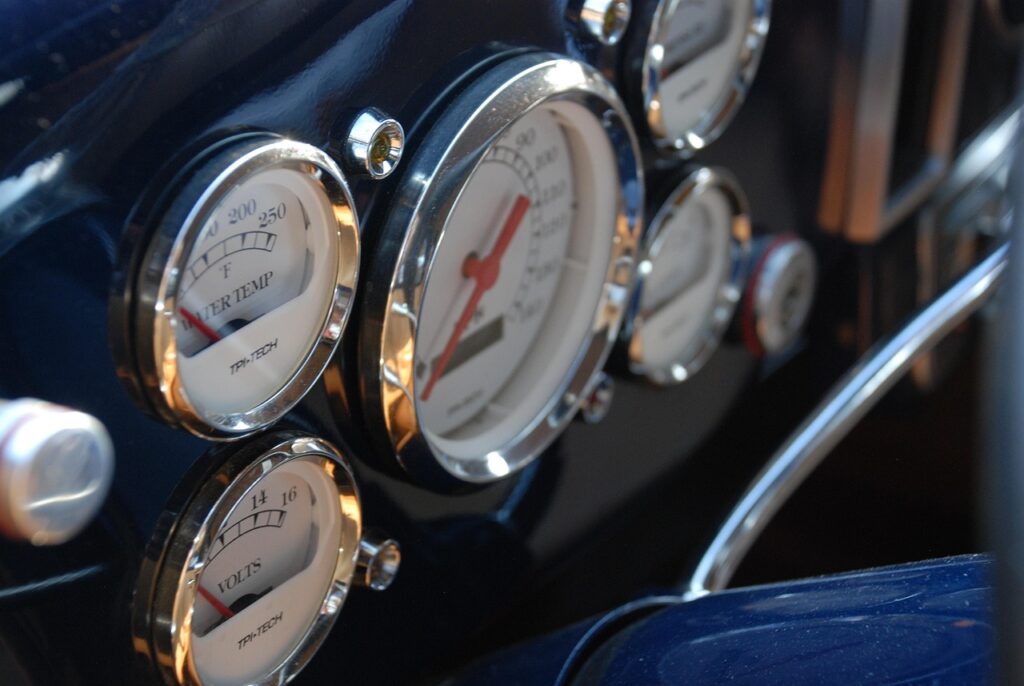
What coolant temperature is too high? Generally, anything above ~220–230 °F (105–110 °C) is cause for concern in classics. If your radiator is properly pressurized, coolant won’t boil until above 250 °F, but running in the 240 °F range for any length of time can spell trouble. If your temperature gauge hits the red or your warning light comes on, play it safe and let the car cool rather than pushing on. It’s better to arrive a bit later than to warp a cylinder head or blow a head gasket. While modern cars rarely overheat, remember that many classics did run hot even when new – so you’re not alone, and it’s not necessarily your fault if it runs a bit warm. The key is managing it proactively.
Also check your oil pressure and oil temperature if you have those gauges. Long motorway stretches on a hot day can thin out your oil; make sure you’re running an appropriate oil grade for summer (many classic owners opt for a slightly thicker viscosity in heat). A rule of thumb: if you see oil pressure dropping unusually low at hot idle, your oil might be overheating or thinning – time for a cooldown stop. Regular oil level checks at fuel stops are a must; older engines can consume a bit of oil on long runs, so topping up is routine.
Planning Reasonable Daily Distances (Don’t Overdo It)
One of the joys of a road trip is not having to rush. This is especially true in a vintage car. Unlike a modern vehicle that can effortlessly gobble up 800 km in a day, your classic will be much happier – and you will be less fatigued – with a moderate daily driving plan. Aim for a maximum of about 200–250 miles (300–400 km) per day in your classic, and even less on very challenging mountain routes. In real-world terms, that’s roughly 5 to 6 hours of driving on highways in a day, which many veteran classic road-trippers find comfortable. It leaves time for plenty of breaks and sightseeing. On back roads or in mountainous terrain, you might cover as little as 150 miles (240 km) and call it a day – that’s perfectly fine.
Why limit your mileage? For one, driver fatigue: classics often have more noise, heat, and heavier controls, which can wear you out faster. And while your car might happily run all day, pushing an older machine for 10+ hours straight, day after day, can increase the risk of something going wrong. Components get heat-soaked and stressed. The sweet spot reported by many classic owners on tour is around 200 miles per day on good roads. That way you arrive at your destination with daylight to spare and energy to tinker with the car if needed (or just relax with a drink!).
Also plan to take a break at least every 2 hours of driving. Not only does this refresh you, it gives the car a chance to cool down a bit, and you can do a quick walk-around inspection. During pit stops, glance underneath for any new leaks, check that nothing’s amiss under the bonnet, and verify that your tires (and brakes) aren’t overheating. These periodic checks can catch issues early. Remember, part of the fun is enjoying the journey – so build in those rest stops. Your classic and your passengers will thank you.
Must-Carry Spare Parts and Tools
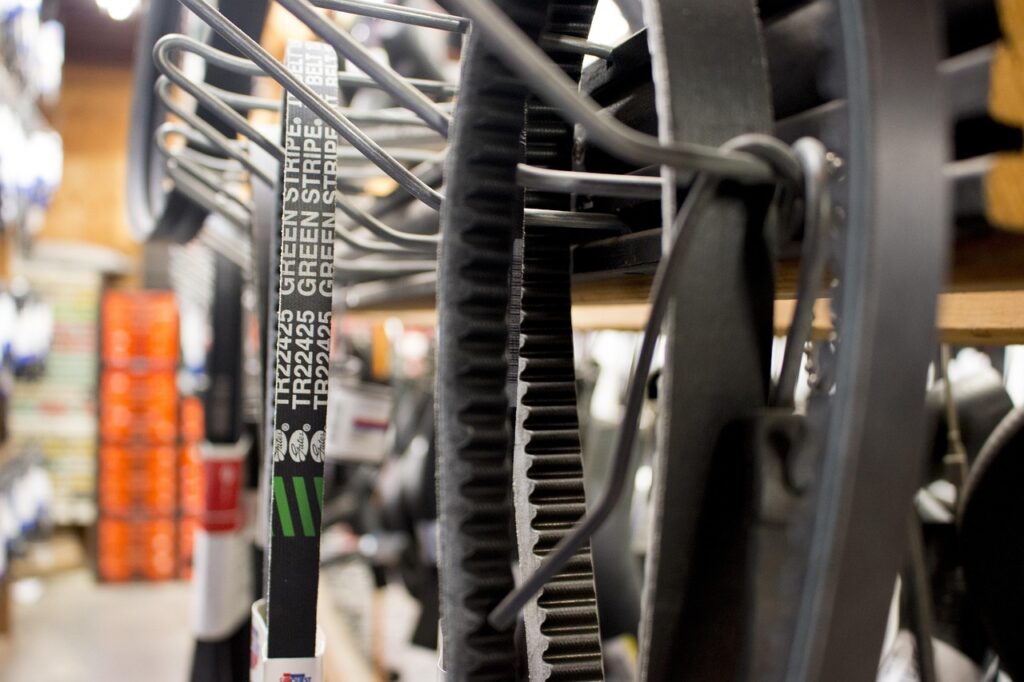
When driving a classic long-distance, carrying some essential spare parts and tools is highly recommended. You don’t need a whole garage in your boot, but a small kit of critical items can be a lifesaver if something fails in a remote area. Here’s a checklist of spares and tools savvy classic owners often bring on road trips:
Belts and Hoses: At least a spare fan belt (alternator/generator belt). If your radiator hoses are old or an uncommon type, pack spares. Fresh hoses and belts installed before the trip are ideal, but carrying a spare set is cheap insurance.
Ignition Parts: Points, condenser, and coil (if your car uses them), or a spare ignition module for electronic ignitions. Also spark plugs (pre-gapped) and a spare ignition lead or two. These small parts can stop you cold if they fail, so have backups.
Fuel System: Consider a spare fuel filter (especially if your car has an older tank that might shed rust) and some length of fuel hose plus clamps. A mechanical fuel pump failing is rarer, but some carry an electric facet pump as a backup. At the very least, know how to bypass the pump or clear clogs. A small can of WD-40 or carb cleaner can help in a pinch.
Fuses, Bulbs & Electrical: A selection of the correct fuse types for your car, and a couple of spare bulbs for headlights/taillights (European countries require all lights working). Also bring electrical repair basics: electrical tape, a few crimp connectors, wire, and zip ties and duct tape for general fixes.
Fluids: A litre of engine oil, a bottle of premixed coolant (or water), and perhaps some brake fluid. Your car might not need them if all goes well, but if you spring a small leak or start consuming oil, you can top up to get to the next town.
Tool Kit: Bring a decent set of tools sufficient for common repairs. Include spanners (in the sizes your car uses), screwdrivers, pliers (regular and needle-nose), Vise-Grips, a socket set if space allows, a knife or utility blade, and a multimeter (or at least a test light) for electrical troubleshooting. Don’t forget a hammer or mallet (persuasion tool) and a set of Allen keys or specialty tools if your car has them. Many classic owners stow a tool roll that lives in the car – make sure it has what you need.
Tyre and Jack: This should go without saying, but ensure you have a usable spare tyre (properly inflated and that still holds air!), a jack, and a wheel spanner that fits. For extra precaution, a tyre plug kit and a 12V or battery operated air compressor can fix a minor puncture without needing the spare.
Odds and Ends: Some additional handy items: a torch (headlamp style is great for hands-free use), work gloves, rags, a fire extinguisher rated for automotive use, and a first aid kit. Also consider a portable battery jump pack if your car’s electrical system is finicky – it can save you from waiting for a jump start.
Carrying these spares and tools will solve 90% of minor issues that might occur. Many experienced road-trippers specifically advise bringing any part that, if it failed, would completely immobilize the car and is small enough to carry. For example, if your car has an external rotor or odd ignition component that could stop the trip, throw a spare in the boot. If you recently replaced a critical part with a modern reproduction, consider bringing the old one as a backup – sometimes new repro parts can be unreliable. And as one enthusiast quipped, if you bring a spare, you likely won’t need it – Murphy’s law of road trips!
One more tip: before you leave, get the car on a lift and inspect it thoroughly. Check for leaks, loose bolts, worn suspension or brake components, etc. Tighten anything that looks like it could shake loose. A pre-trip once-over and run up and down your local motorway can catch issues that would be hard to deal with on the roadside.
European Breakdown Cover for Classics – What to Check
No one likes to imagine their pride and joy on a tow truck, but part of being prepared is having a good breakdown recovery policy – and knowing how it applies to your classic car in Europe. Standard modern car breakdown cover (like AAA, AA, RAC, etc.) doesn’t always cover older vehicles, especially outside your home country, so read the fine print. Here are some key things to check or arrange:
Age Limits: Many breakdown providers have an age cutoff (often 10 or 15 years) for standard policies. You may need a specialist classic car breakdown policy or an add-on to cover your older vehicle. Don’t assume it’s covered just because you have breakdown assistance on your daily driver’s insurance – check that they accept the age of your car. Some companies explicitly don’t cover “older” cars, but there are others (and specialist insurers) that do cover vehicles of any age. If in doubt, go with a provider that caters to classics.
European Coverage: If you’re based in the UK, for example, most breakdown policies require a supplement for European travel. Make sure Europe coverage is in place for the countries you’ll visit and for the full duration of your trip. Some policies include a certain number of days (e.g. 30 or 60 days abroad) as standard, while others require you to purchase the exact travel dates. Verify the countries covered – Switzerland is often included in “European” cover, but double-check (since it’s outside the EU). Know the procedure: usually, you’ll have an international hotline number to call if you break down abroad – keep this number handy (write it down or save it in your phone).
Roadside Repair vs. Recovery: Understand what the policy offers. Will they attempt to fix the car on the roadside? (Most will, if possible.) If not fixable, will they tow you to a garage and is there a distance limit? Basic policies might only tow to the nearest garage within 10 miles, whereas premium cover often includes long-distance recovery or even repatriation back to your home. Given you’re on a road trip, a policy with nationwide recovery (in the country you’re visiting) or onward travel is very helpful. Onward travel might cover a hire car or accommodations if your car is out of action.
Repatriation: This is a big one for classic cars. If your vehicle suffers a major failure that can’t be fixed quickly abroad, will your breakdown cover pay to transport it back home? Many European breakdown policies include repatriation of the vehicle (often with some terms, like if repair will cost more than a certain amount or take longer than X days). Check if there’s a cost limit on this. Repatriating a car from Europe to the UK, for example, can be expensive, so you want that covered. Also, some policies might not repatriate very old or low-value vehicles – clarify that since classic “value” is hard to judge. It’s not fun to think about, but having this safety net will give you peace of mind.
Coverage for Passengers: If you have a co-driver or friends along, ensure the policy covers all of you for transport or accommodations if stranded. Usually, if the vehicle is covered, all occupants are assisted, but personal travel insurance can fill gaps for trip interruption.
Policy Paperwork: Bring along your breakdown policy number and the emergency contact number for use in Europe. Many policies issue an “international breakdown card” or include details on the back of your insurance certificate (the famed Green Card for insurance is separate from breakdown cover, but ensure you have your insurance docs too!). Having these documents easily accessible will reduce stress if you need to call for help.
If your classic is insured with a specialist provider, there’s a good chance European breakdown cover is included or offered as an add-on. Companies like Hagerty, Footman James, etc., often have tie-ups with assistance networks that understand classic cars. They might even dispatch a mechanic knowledgeable about older vehicles if available. Do a bit of research and choose a policy that won’t leave your classic stranded. As a rule, do not set off without breakdown coverage for Europe – the cost of a single recovery off an autoroute or a tow to a garage could far exceed the policy price.
Lastly, note that in Europe, especially the EU countries, there is a network of national auto clubs (ACL, TCS, ADAC, AA Ireland, etc.) that often work together. If you are a member of one, you typically can get reciprocal assistance from partners. For example, a German ADAC membership might help you in France via their partner network. Similarly, UK’s AA or RAC European packages will coordinate with local clubs. This means when you call, you’ll likely get an English-speaking operator who then contacts, say, the ADAC in Germany or Touring Club Suisse (TCS) in Switzerland on your behalf. Understanding this system can demystify the process – you won’t necessarily get a branded tow truck from your country; it will be a local garage or auto club contractor dispatched. What matters is having that cover and phone number ready.
What to Do If You Break Down – France, Germany & Switzerland
Even with all the prep, things can happen: perhaps a fuel pump gives up on a Swiss mountain, or an electrical gremlin strikes on a French highway. Knowing how to react and who to call in each country will turn a potential disaster into just a manageable delay. Here’s a rundown for France, Germany, and Switzerland:
Breaking Down in France (Autoroutes and Beyond)
France has a specific protocol if you break down on its autoroutes (motorways). By law, only authorized recovery services can operate on French motorways, and they are dispatched by the police or motorway control – not directly by your own breakdown provider. What this means: if you have a breakdown on a French autoroute, do not call your UK/European breakdown hotline first, as they will just instruct you to do the following:
- Pull over safely onto the hard shoulder as far to the right as possible. Turn on your hazard lights.
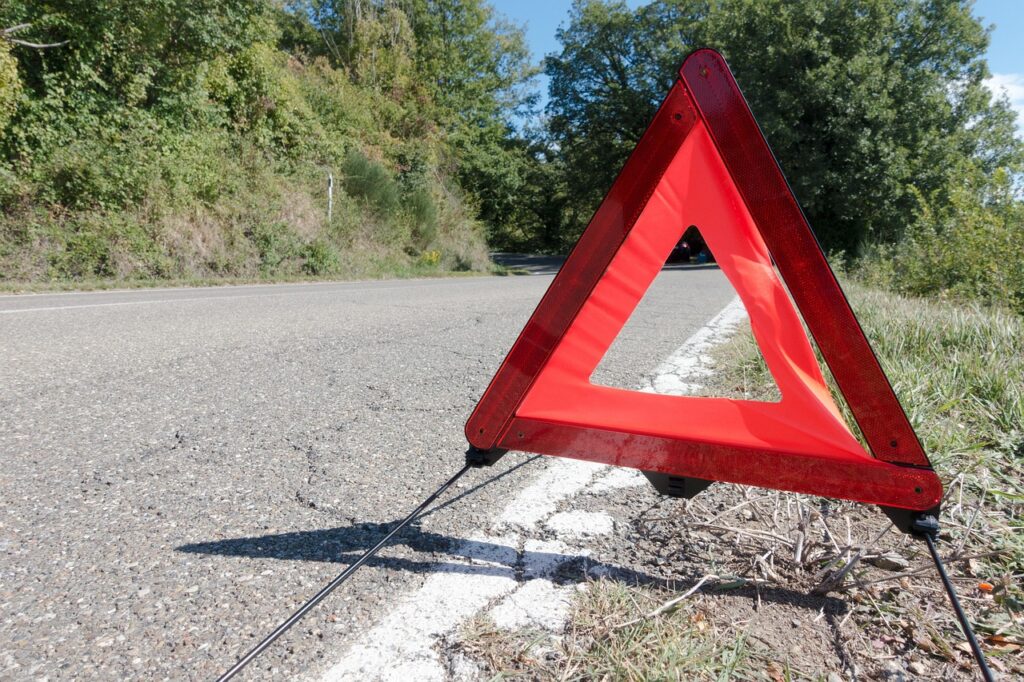
- Put on your high-visibility safety vest (required by law to have in the car) before exiting the vehicle, and ensure any passengers do as well. Place your warning triangle about 100 m behind the car if it’s safe to do so (on a busy autoroute, prioritize your safety – the orange emergency phones are spaced about every 2 km).
- Get to a safe spot behind a barrier or far from traffic while you call for assistance. You have two main ways to call for help in France: use the nearest orange emergency SOS phone (this connects directly to motorway police/control) or call 112 on your mobile. (112 is the Europe-wide emergency number and in France it will reach the motorway operations.) You can also signal a patrolling highway officer or ask staff at a service area to call for you.
- Communicate your situation. French operators will typically get by in English if you say, “Bonjour, je suis en panne.” (Translation: “Hello, I have broken down.”) Give any details like your location (look for small marker posts or identify the last exit number you passed).
- The autoroute control will send an approved towing service to your location. This usually happens quickly. Important: You will likely have to pay for the tow initially (set fees by government, around €130-150 for a basic tow in daytime, more at night/holidays).
- After being towed off the autoroute to a safe area or garage, you should then contact your breakdown insurance provider (if you haven’t already) and inform them. Typically, they will take over from there – often they can guarantee payment directly with the French garage or tow operator for the costs, so you don’t have to pay out of pocket. If you did pay, keep the invoice to get reimbursed.
If you break down on a normal route nationale or secondary road in France, the procedure is a bit simpler: you can call your breakdown assistance hotline directly and they will send help. Still, follow the safety basics (hi-vis vests, triangle, get the car off the road if possible). On non-autoroute roads you have more flexibility to use local garages or your insurer’s partners.
Etiquette and legal must-dos in France: Wearing a reflective vest and deploying a warning triangle are legally required in a breakdown. French drivers are used to this routine. Also, never attempt to cross a multi-lane autoroute on foot to reach a phone – there’s one on each side. The police may show up as well to secure the scene – cooperate with them; often they just want to ensure you’re safe and the procedure is followed.
The good news is French autoroute breakdown services are efficient, and if you have coverage, you usually won’t have to pay much or anything in the end beyond maybe the initial outlay. Once at a garage, you might find smaller local garages in France are willing to help get a classic back on the road, but be patient if parts need ordering. If it’s a minor issue (e.g. ignition coil failure) and you have the spare part, you might even fix it yourself at the garage’s forecourt. If the problem is severe, your breakdown provider may arrange onward travel and even vehicle repatriation. The key takeaway: follow the French system on motorways – 112 or SOS phone first – and loop in your insurer as soon as practical.
Breaking Down in Germany
Germany’s autobahns don’t have the same strict towing rules as France, but the priority is safety and swift clearance. If you break down on a German autobahn or any road:
Pull to the shoulder, put on your hazards, and as in France, wear your safety vest and set up your triangle (~100 m behind on highways) to warn others.
It’s acceptable to use 112 in Germany as well for emergencies – this will reach police/fire who can dispatch help if you are in a dangerous spot. You can also dial the German police directly at 110. For a pure breakdown without injuries, you can skip directly to calling your breakdown assistance number (e.g., a UK insurer’s German partner line, or if you have ADAC membership, call them).
Germany has an extensive auto club network. The ADAC (German Automobile Club) is the largest. Even if you’re not a member, ADAC yellow trucks might stop to assist if they see a stranded motorist – they are known for helping anyone and sorting out paperwork later. You can reach ADAC’s English hotline at +49 89 22 22 22 (or 22 22 22 from a German cell).
Once again, your own European breakdown cover will likely coordinate with ADAC or another local service. When you call your policy’s number, they will usually send an ADAC patrol or a partner garage tow truck. Germany doesn’t restrict who can tow on highways, so your assistance provider has more flexibility.
Etiquette in Germany: Stand well off the road (ideally behind a barrier). German drivers approach breakdowns swiftly (no speed limit in some sections), so the triangle and early warning are critical. It’s illegal to run out of fuel on the autobahn (considered preventable), so if your “breakdown” is an empty tank, be aware you might get a fine – always keep plenty of fuel, especially if traffic jams are possible.
In summary, in Germany: use your breakdown cover number or call 112 depending on the situation. There’s no one like the ADAC for roadside help; they even carry common spares for modern cars and will do on-the-spot fixes whenever possible. If you have a classic, they’ll certainly try to help (old VWs, Mercedes, etc., are not uncommon on German roads). Keep calm, and rest assured that breakdown assistance in Germany is among the best.
Breaking Down in Switzerland
Switzerland, despite being outside the EU, has a well-organized system for breakdowns, and your European cover should include it (check that it does!). Steps if you break down on a Swiss motorway or road:
As always, get to safety: hazard lights, vest on, triangle out. Swiss law also requires these precautions. On highways, use the roadside emergency phones or call for help. Switzerland actually has a dedicated breakdown number: 140 is the nationwide number for roadside assistance (connected primarily to the TCS, Touring Club Suisse). You can dial 140 from any phone in Switzerland for help with a vehicle breakdown.
You can also call the general 112 emergency if you feel unsafe or can’t reach 140, but 140 will directly get a breakdown service. The police number is 117, which you might call if, say, your car is blocking traffic and you need immediate traffic control.
In Switzerland, it’s advised to involve the police if you break down on the highway – they often will come to protect the scene, especially if your car is in a risky position. The Continental breakdown guide notes that calling the police is a measure for safety in any highway breakdown in Switzerland. They may set up flares or arrange the tow.
Practically, if you call 140, the TCS (Swiss auto club) patrol will likely arrive or dispatch a local garage. TCS provides help to members and non-members (non-members may pay on the spot, then reclaim from insurance). If you have breakdown insurance, call them as well or after calling 140 – they might directly send TCS and cover the cost.
Swiss etiquette and rules: Similar to others – triangle placement (at least 50 m behind on normal roads, 100 m on autobahn), and stand away from traffic ideally up an embankment or behind barrier. One quirk: if you need a tow in the Alps, towing might only be to the next town – long-distance tows within Switzerland can get pricey, which is why having coverage is crucial.
Swiss garages are high quality but also high cost. On the plus side, if your classic is something like an old BMW, Mercedes, etc., you might actually find expertise there. Language is usually not a barrier: in Swiss German areas, many speak English; in French areas, you can likely use French similar to France. The Swiss are quite helpful to stranded tourists. TCS even has an international number +41 58 827 63 16 if your cell phone won’t dial the short 140.
If your car needs more than a quick fix, your breakdown cover might put you and your passengers in a hotel and arrange transport for the car. Switzerland’s mountainous terrain can be hard on older cars’ cooling and brakes – don’t hesitate to ask for help if you suspect something’s wrong; it’s better than getting stuck on a high pass.
General Breakdown Etiquette (All Countries): In all three countries (and throughout Europe), the fundamentals are the same: get your vehicle as far off the road as possible, use hazards/vest/triangle to secure the scene, and then call for help. Do not continue driving an unwell car in a dangerous location – for example, if you’re overheating badly while climbing a pass, find a turnout to cool down rather than blocking a lane. Carrying a basic phrase book or translation app can help if you need to communicate with a local mechanic (though many will know basic car-part English). In most cases, if you have a solid breakdown policy, the process will involve a tow to a garage and either a fix or onward arrangements.
How local garages treat classics: Many European mechanics actually have a soft spot for classic cars and will do their best to help a traveler. Don’t be surprised if your car draws a small crowd of curious onlookers at a garage – that “classic car charm” goes a long way. However, be prepared for the reality that parts for your car may not be readily available locally. This is where your stash of spares can save the day. If your fan belt snaps in the Alps, the local garage may not have the correct size on the shelf – but if you hand them your spare belt, you’ll be back on the road in minutes. The same goes for things like ignition components or hoses: if you have it, the mechanic can install it; if not, you might wait a day or more for parts to ship. So, a classic car road trip is also about self-reliance – you and your car, with some help from friendly locals and your insurance, will form a little team.
In France, small garages (“garagiste”) can usually handle basics and tire repairs; in Germany, you might be taken to a bigger workshop (many dealerships also serve as service centers); in Switzerland, be ready for very high labor rates – sometimes it might even be cheaper to tow the car into neighboring Germany for repair if near the border, but that’s something your assistance company will decide.
One more tip: know the emergency numbers by heart: 112 works in all these countries for any emergency. Additionally, remember 17 in France (police), 110 in Germany (police), and 117 in Switzerland (police) if needed. But if you forget, just dial 112 and they’ll route you appropriately. And always have that breakdown policy number to call for English-speaking help.
Final Road Trip Tips
Traveling across Europe in a classic car is as much about the journey as the destination. With your engine tuned and cool, your spare parts packed, and your itinerary allowing the old boy/girl (and you) some rest, you’re set up for success. Enjoy cruising those Autobahns, savour the climb up alpine roads (the views and the cooler air at altitude are worth the ascent), and take time to explore villages and meet people. Often locals will be excited to see your classic car – you might get thumbs-up and friendly chats at petrol stations.
Before you depart, make sure you’ve also checked non-mechanical things: are your tyres in good shape and properly inflated (including the spare)? Are all your lights working (bring spares)? Is your paperwork in order (insurance, breakdown cover, vignettes for Swiss/Austrian motorways, etc.)? And pack smart for yourselves: bring sun protection (older cars + sun = roasted arms), plenty of water for passengers (and a bit for the car), and maybe a cool bag with snacks (that won’t melt!) – nothing like a picnic by the roadside if you need to pause and let the engine cool.
By adhering to these preparations and best practices, you’ll greatly increase the odds that your summer road trip is memorable for all the right reasons. There is something immensely satisfying about crossing countries in a vintage machine – a blend of nostalgia, adventure, and mechanical symbiosis. With the right prep, your classic car can absolutely handle long motorway slogs and Alpine passes. Treat it kindly, listen to what it’s telling you (via the gauges and a bit of intuition), and you’ll both have an amazing journey.
Here’s wishing you bon voyage, gute Fahrt, and buon viaggio on your European classic car road trip. May the weather be fair, the traffic light, and your motoring trouble-free! And if a hiccup does occur, now you’re prepared to handle it like a pro – with a toolkit in the boot and a smile on your face. Happy motoring!
I hope this article has been useful in your road trip planning and helps you to have the confidence to get out there and enjoy the open road and a beautiful vehicle. If you like what you read here, be sure to check out our bi-weekly newsletter, the Touring Standard, and our Ultimate Road Trip Guide. Finally, check us out on Instagram if you haven’t already!
Sources:
Hagerty UK – Tips for driving your classic in summer heat
Footman James – How to prevent classic car overheating
Reddit r/classiccars – Road trip prep advice from enthusiasts
OldClassicCar Forum – Recommended daily mileage for classic tours
Carole Nash Insurance – Classic car breakdown cover in Europe
Start Rescue – Breakdown cover for older vehicles
BH Assurances (France) – What to do if you break down on a French motorway
MotorwayAreas.com – *Emergency numbers for roadside assistance (CH, DE)*
