
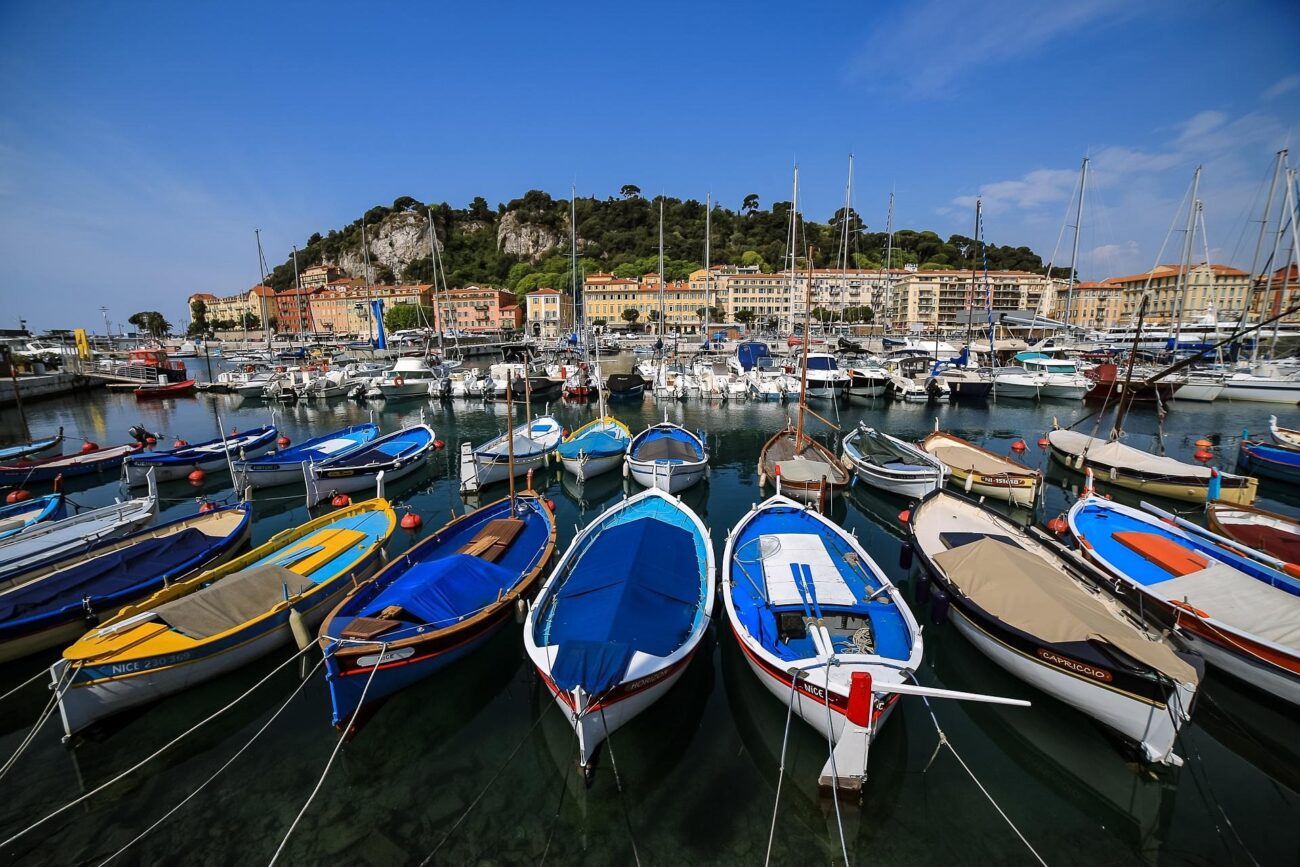
There is a motorway that will get you from Paris to Nice in about nine hours. It is fast, efficient, reasonably well sign-posted, and almost entirely devoid of anything worth remembering. The French call it the Autoroute du Soleil. You can take it if you like. We’d rather you didn’t- there is a much, much more interesting way to spend your time behind the wheel :-).
Running roughly parallel, sometimes a field’s width away, sometimes a whole valley over, is one of the great roads of Europe. A road with songs written about it, legends attached to it, and a history that stretches back to the Romans. A road lined with plane trees, dotted with small towns where lunch is still a serious occasion, and almost entirely free of the tolls that make the autoroute so tedious to pay for.
This is the Route Nationale 7. And it might just be the finest road trip in France.
A road with a past
The Romans got here first, as usual. Their road between Lyon (then Lugdunum, capital of the Gauls) and the Mediterranean followed a similar line to what we now call the RN7. Centuries later, King Louis XI built a royal postal network along the same route, and Napoleon later upgraded it into an imperial road, designating it, with characteristic modesty, as Road Number 8 on the way to Rome.
The Republic renamed it Nationale 7, and the 20th century turned it into legend.
Before highways and high-speed trains, there was only one road that mattered: the Nationale 7. It carried generations of French families heading south for their first paid vacations, the new “holiday rights” introduced in the 1930s that changed the country forever. Every summer, the road filled with cars packed with kids, luggage, and picnic baskets, all bound for the sun.
Like America’s Route 66, France’s Nationale Sept is one of the few roads in the world distinguished enough to have a song written about it. Charles Trenet’s 1955 jazz number Route Nationale Sept, with its tinkly bells and brush of the hi-hat, transports the listener into holiday mode.
The French called it the Route des Vacances. The Route Bleue. And, during the annual August exodus when every Parisian appeared to be leaving simultaneously, the Route de la Mort, the Road of Death, a title earned by epic traffic jams rather than anything more sinister.
Then the autoroutes arrived. The great migration moved onto tarmac wider and faster. The RN7 went quiet. And in doing so, it became exactly the kind of road we want to drive.
The route
The route runs from Paris to Menton, nearly 1,000 kilometres of road passing through some of the country’s finest landscapes, from the forests south of the capital through Burgundy, Lyon, the Rhône Valley, Provence, and finally onto the Côte d’Azur.
End to end is a minimum of five days if you’re doing it properly. Seven is more like it. You could do sections of it as a day trip from a base in Lyon or Avignon, or join at any point and follow it south. The beauty of the RN7 is that it rewards exactly the kind of relaxed, unhurried approach that suits a car worth driving.
Here is a rough breakdown of what to expect, stage by stage.
Stage 1: Paris to Fontainebleau (~65 km)
The road begins at the Porte d’Italie (not Paris’s most glamorous exit) and the southern suburbs can be forgiven for making an uninspiring first impression. Push through. The sprawl gives way relatively quickly, and within an hour you are crossing into the Forêt Domaniale de Fontainebleau: 25,000 hectares of ancient woodland that the French have been using as a royal playground since François I built his great château here in the 16th century.
The château is worth at least an hour of your time. Built by François I, with its striking horseshoe staircase, it remains inseparably associated with Napoleon, who bid farewell to his Old Guard in its courtyard. Beyond the town, the first real rhythm of the road establishes itself, the long, straight stretches bordered by plane trees, the quiet villages, the gentle sense of France unwinding in front of you.
Stay: Hôtel de Londres, Fontainebleau. Right on the square, with rooms overlooking the château.
Stage 2: Fontainebleau to Nevers (~190 km)
The road continues beside the River Loing to Montargis, a canal-laced town with more bridges than most people have had hot dinners, before the landscape opens out into the flat, agricultural centre of France. This is quietly beautiful country. Not dramatic, but deeply, contentedly French.
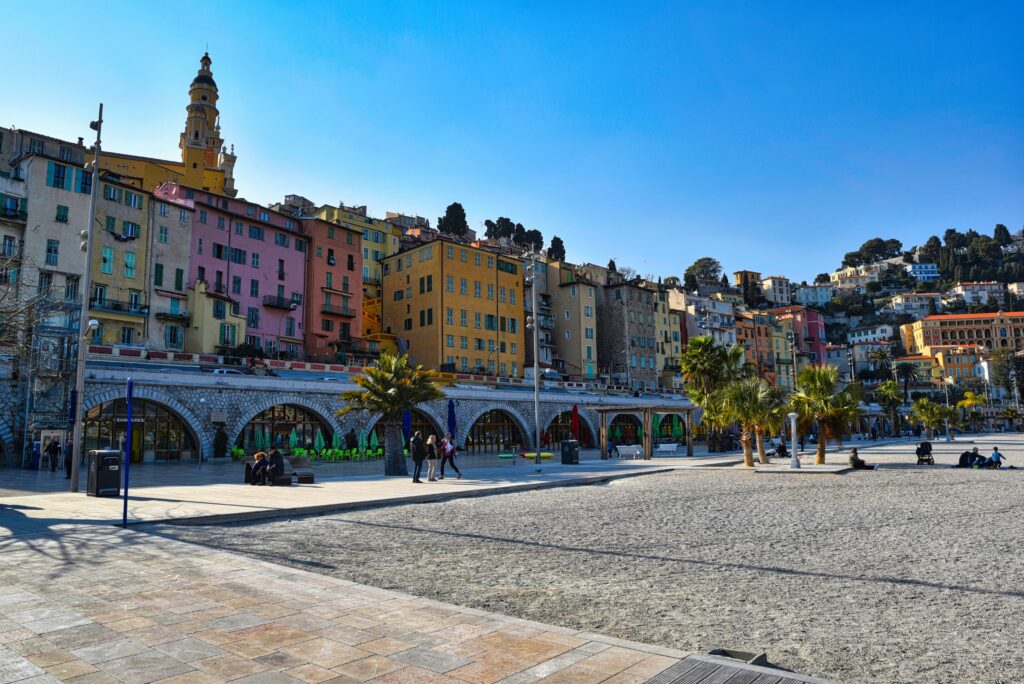
A worthwhile detour: Sancerre. An 80km detour from the N7 at Cosne-Cours-sur-Loire takes in the wine village, the outstanding Plus Beau Village of Apremont-sur-Allier, and the Canal latéral à la Loire. Leave room in the boot for a few bottles purchased direct from a vineyard, and you’ll congratulate yourself for the rest of the trip.
The road then reaches Pouilly-sur-Loire and its mythical “Relais des 200 Bornes” — a roadside stop with a décor apparently frozen in the 1960s. At Nevers, the cathedral of St-Cyr-et-Ste-Julitte dominates the skyline as the route crosses the Loire, the last wild river in Europe.
Nevers also has another claim to fame for the petrolhead: Magny-Cours, the former home of the French Formula 1 Grand Prix, sits just a few kilometres south of the city.
Stay: Hôtel de la Loire, Nevers. Understated and properly French.
Stage 3: Nevers to Lyon (~230 km)
This is where the road earns its stripes.
Through Moulins and Lapalisse — a notable stopping point in the 1960s heyday of the Route des Vacances, with its formidable hillside château still making a compelling case for your time — the N7 then turns southeast and climbs into the brooding Monts de la Madeleine before descending to Roanne, where the route meets the Loire once more.
Roanne deserves more than a fuel stop. The Maison Troisgros, one of the great restaurants in France, is located right here — and has been since before the autoroutes arrived. This was the heart of what the route gave birth to: the tradition of great restaurants serving travellers well. The RN7 is, in a very real sense, one of the birthplaces of modern French haute cuisine.
Beyond Roanne, the road climbs again into the Monts du Lyonnais. At 759 metres, the Col du Pin-Bouchain is the highest point on the entire route — the descent towards Tarare, through pine and beech forest, is genuinely enjoyable in anything with decent steering. Then come the golden stones of the Beaujolais hills, and eventually Lyon herself.
Give Lyon a day. More if you can. The food market at Les Halles de Lyon Paul Bocuse is not optional.
Stay: Le Royal, Lyon. Central, classic, correct.
Stage 4: Lyon to Valence (~100 km)
South of Lyon, the Rhône Valley asserts itself. The river is always close. The vineyards of Côte-Rôtie and Condrieu cling to steep granite terraces on the western bank, and the first hints of the south appear in the light and the colours.
At Tain-l’Hermitage, the Valrhona chocolate factory has been turning cocoa beans into extraordinary chocolate since 1922 – the boutique is dangerous. The town also sits at the foot of the Hermitage hill, one of the great wine appellations of the northern Rhône. A quick detour to a tasting room is entirely in keeping with the spirit of the journey.
Further south, Valence marks the point where France begins to feel properly Mediterranean.
Stage 5: Valence to Avignon (~150 km)
The road passes through Montélimar, the nougat capital of France, since you ask, and on into Provence proper, through the lavender-scented plains approaching Avignon.
Avignon is a place to stop and breathe. The Palais des Papes, the vast, imposing papal palace that dominated European Christianity for much of the 14th century, is extraordinary. The bridge, though partial, is exactly as charming as the song suggests. Wander the old town in the evening and eat somewhere with a terrace.
Stay: La Mirande, Avignon. A 14th-century cardinal’s palace turned hotel. Outrageously good.
Stage 6: Avignon to the coast (~200 km)
This is where the road changes character entirely and becomes something close to thrilling.
The A8 motorway cuts through the plains to the north, bypassing all the wonderful countryside and culture that rewards those who stick with the N7. South of Brignoles, the road enters the Massif de l’Estérel, a mountain range of dramatic red volcanic rock that tumbles straight down to the turquoise sea. The road here winds and rises and falls with proper purpose.
At the covered market in Antibes, the thing to eat is socca, a chickpea-flour crêpe baked in a wood-fired oven. Then the palm trees take over from the plane trees, and the Riviera arrives with predictable theatricality.
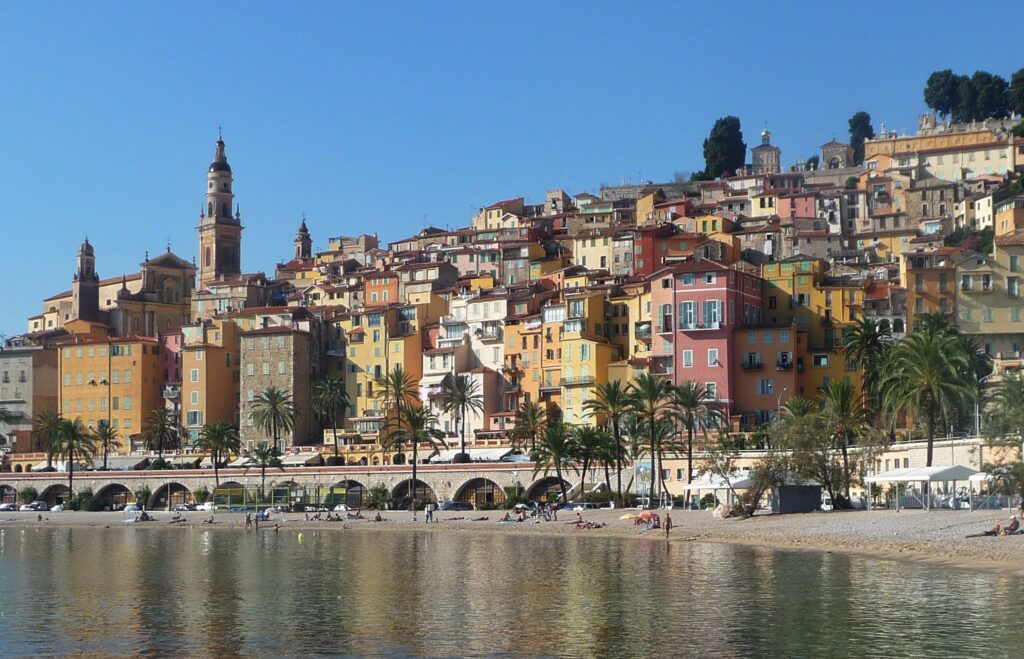
From Cannes, the route follows the coast through Antibes and on into Nice. Beyond Nice, the road takes the Moyenne Corniche around Monaco, one of the great driving roads in Europe, before the route finally ends at Menton, close to the Italian border, in a town famous for its lemon groves and its entirely un-Riviera quietness.
The final destination is the lemon groves of Menton, owned, as it happens by a retired Formula One driver. A fitting endpoint for a journey like this.
Practical notes for the road
Which car? Almost anything works on the RN7, but it rewards a car with character. Long, straight stretches mean a grand tourer is in its element for the northern sections. South of Lyon, where the roads tighten and the landscape gets more interesting, something more agile comes into its own. A sports car on the Estérel section is a genuinely special experience.
When to go? Spring and early autumn are the answers. May and September give you warm weather, empty roads, and the best light. July and August recreate the original Route de la Mort experience — which is fine if nostalgia is your thing, but less fine if you’d like to actually move.
Navigation: The RN7 has been partially re-signed as various Départementale routes (the D7, D607, D6007 in different sections), so your GPS may struggle to follow it as a single road. The best approach is to plot it town by town, using Fontainebleau, Nevers, Roanne, Lyon, Valence, Montélimar, Avignon, Aix-en-Provence, Fréjus, and Nice as waypoints. In this respect the RN7 isn’t the easiest route ever, but it is very rewarding, and fun to plan.
Tolls: Largely absent until the Riviera section. The A8 parallel route charges considerably, which could be one of several reasons to avoid it.
Time: Allow five days minimum, seven comfortably. There is no prize for finishing quickly. That rather misses the point.
Why it matters
There are faster ways to get to the south of France. There are more dramatic roads in Europe, more challenging mountain passes, more technically impressive pieces of engineering.
But the RN7 has something most roads don’t: a soul. It is a road that meant something to an entire country for decades, that carried the collective holiday dreams of generations of French families heading south for the sea and the sun. You can still find the double lines of plane trees, abandoned service stations, and traces of hand-painted advertisements on the walls of old farms.
Drive it in something interesting and you will feel it. Not just a good road. A road with a story.
Enjoyed this? Subscribe to The Touring Standard, our free fortnightly newsletter packed with routes, road trip ideas, gear recommendations and classic car stories from across Europe. Join the community at eurocartrips.com and on our dedicated WhatsApp group.
