

The gates to many of our favourite European passes start closing for the winter soon. However, Europe’s car-carrying trains keep running, and almost nobody writing in English tells you they exist.
There is a particular kind of silence that comes over a car when you arrive at a closed pass. Nobody says anything for about four seconds. Then someone opens the maps app, and the detour is typically very long, dark, and on a road you did not choose, to a hotel that stops serving dinner at 9pm.
We are entering the season for it. The high Alpine roads are open now, and they are at their best now- thin, clear air, the tourist traffic gone home, hairpins you can actually see round. But from the end of September the situation changes, and by late October a good number of the roads on your route simply stop being roads.
Most people plan around this by hoping. There is a better answer, and it has been sitting under the mountains for a century. It’s a fascinating part of the Alpine infrastructure which means that, subject to checking your route, there actually might be a way you can road trip this area out of peak times. Read on, dear reader…
First, what actually happens in autumn
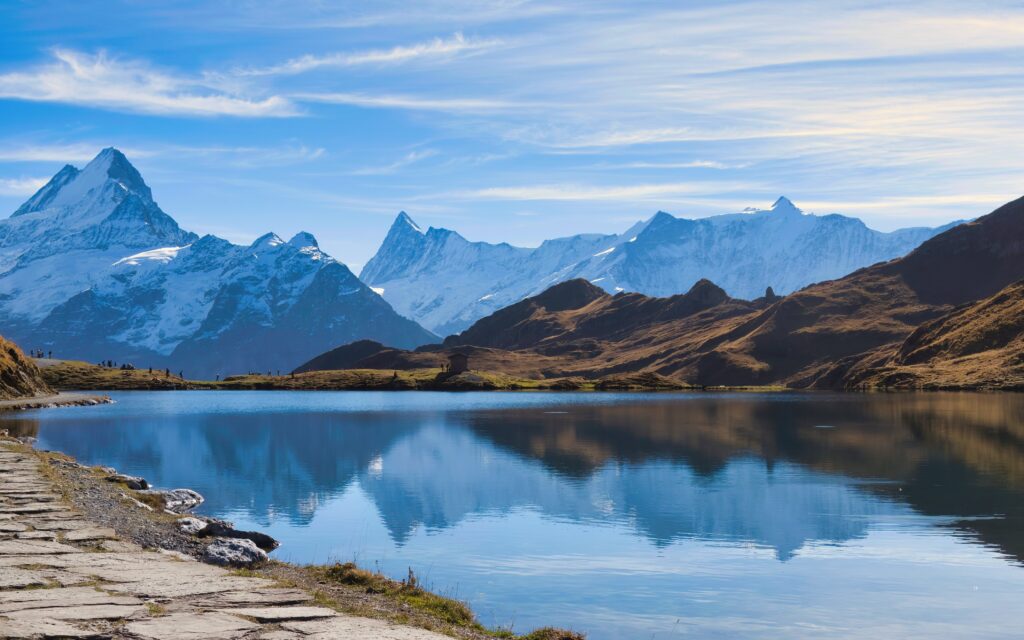
The failure most drivers experience in September and October is not a snowed-in summit. It is a gate.
Several of the great toll roads have night closures, and the closing time moves earlier as the season turns. The Grossglockner High Alpine Road runs 06:00 to 19:30 from the beginning of September, with last admission 45 minutes before the night closure, so in practice the barrier stops accepting you at quarter to seven in the evening, not half past seven. The Timmelsjoch is open 07:00 to 20:00, and driving it at night is prohibited outright. Neither of these is a weather event. Both of them will strand you on the wrong side of a mountain on a perfectly clear evening if you leave a long lunch too long. These roads are beautiful, but do not forget the danger here and the mechanisms to help keep people safe.
Then there is the season end itself. Grossglockner and Timmelsjoch both typically run to the end of October or the first days of November- the Timmelsjoch operators shut the road on 2 November in 2025, and on 30 October in 2023. Note the two-day spread between those years. A published closing date is a forecast, not a promise. An early storm could close a pass for good in mid-October, and a warm autumn keeps it open into November. The road authorities themselves say the dates depend on the weather, which is another way of saying nobody knows in August what the second week of October will do.
The thing nobody tells you: you can put the car on a train
Switzerland and Austria run Autoverlad services – car shuttle trains that carry you and your car through the mountain, on a flat wagon, on a timetable, all year. You drive on, the doors close, and a short while later you drive off into a different valley and a different climate. It is ordinary transport infrastructure that the locals use in exactly the way you would use a bridge or tunnel.
For a driver whose route has just been amputated by a closure, this is the difference between a rescued trip and a ruined one. It is also, on its own terms, a genuinely lovely thing to do with an interesting car. A surprise bonus for your trip, rather than having it curtailed.
Lötschberg – Kandersteg to Goppenstein
The most useful one to know, because there is no road over the Lötschberg at all. Not a closed road, no road. BLS runs the shuttle in about fifteen minutes between the Bernese Oberland and the Valais, and it is the reason Kandersteg to Leukerbad is a short morning rather than a day of motorway. There is a direct Kandersteg–Iselle service straight through to Italy as well, and that one, unlike the others – requires a reservation. Check out the BLS site here.
Furka – Realp to Oberwald
The Matterhorn Gotthard Bahn (MGB) carries cars through the 15.4km Furka base tunnel year-round, in around twenty minutes. MGB reckon it saves about 45 minutes against driving the pass. When the Furka Pass road is shut for winter, and it shuts a good while before the calendar suggests, this is the link between Andermatt and the upper Rhône valley. MGB publish live waiting times and webcams at both portals, which is the single most useful page on the subject in existence.
Simplon – Brig to Iselle
Twenty minutes from the Valais into Italy, also BLS. A useful card to hold when a southbound plan comes apart.
Vereina – Klosters Selfranga to Sagliains
The Rhaetian Railway’s 19km tunnel into the Lower Engadine, eighteen minutes, running every day and every half-hour at busy times. The road alternative is the Flüela Pass, which is a summer road. The fare is seasonal – cheaper in summer, more expensive in winter, and no reservations are taken, so it works like a toll tunnel: turn up, pay, load. RhB publish a congestion forecast for the winter Saturdays, and it is worth a look; waiting times on peak ski weekends run to well over an hour. Check out the Vereina section of the Rhaetian’s website here.
Tauernschleuse – Böckstein to Mallnitz
The Austrian one, and the oldest of the lot: ÖBB have been putting cars through the Tauern tunnel since 1920. Roughly eleven minutes under the Hohe Tauern, hourly in each direction from around six in the morning until eleven at night, and again, no road connects the two ends. Two details that matter for our sort of car: passengers are not permitted to stay in the vehicle, so the driver loads and everyone else sits in a passenger coach; and LPG and natural-gas-fuelled vehicles are excluded from carriage entirely. Website is here.
Diary note for 2027
ÖBB are closing the Tauern tunnel completely from 8 February to 9 July 2027 for the second phase of its refurbishment, which includes modernising the car-loading facilities. If you are sketching a spring 2027 route through Carinthia, take the Tauernschleuse off the map for that window and plan the Felbertauern or the Grossglockner instead. Confirm the dates with ÖBB nearer the time.
Three things everyone repeats that are wrong
This is a corner of European touring where the English-language information is not merely thin, it is out of date. Three corrections worth having:
- The Oberalp car train is gone. The Andermatt–Sedrun shuttle was discontinued in 2023. It still appears on route-planning forums.
- The Albula car train is very gone. RhB withdrew the Thusis–Samedan service after the 2010/11 winter, on both operational and commercial grounds, and the Vereina had taken the traffic.
- There is no car ferry on Lake Geneva. None. CGN’s boats between Lausanne and Évian or Thonon are passenger-only, and they are a fine 35-minute crossing if you are on foot, but if the car is with you it is a long drive round the end of the lake. Several road-trip sites will tell you otherwise. They are wrong, and it is an expensive thing to discover at Ouchy.
Where the ferries do work as roads
Lake Constance is the real one. Bodensee-Schiffsbetriebe run the Friedrichshafen–Romanshorn car ferry hourly, 365 days a year, at around 41 to 46 minutes, which cuts an enormous corner off the drive round the lake between Germany and Switzerland. The Konstanz–Meersburg crossing is the short hop, roughly fifteen minutes – and operates round the clock. Build either into an autumn route and a dull transit leg becomes the part of the day everyone photographs. More info is here.
How to actually use these services
Note: usage methods change over time. The below is correct at the time of writing but as with everything road tripping and Alpine, check before you travel.
- You cannot book most of them, and you don’t need to. Furka, Lötschberg, Simplon and Vereina take no reservations. Kandersteg–Iselle is the exception and does require one.
- Buy online with your registration where you can. Enter the plate when you book the Furka and the barrier reads it and opens; otherwise there is a QR code on the emailed ticket. Do not rely on an unattended machine taking a foreign card at eight in the evening.
- Check the waiting-time page before you commit, not the timetable. The timetable tells you when trains leave. The waiting-times page tells you whether you will be on one of them. Both MGB and RhB publish live figures, and BLS run webcams at all four of their loading stations.
- Mind the ramp if the car is low. You drive up onto a flat wagon over a loading ramp. It is gentler than a Dover linkspan, but a low splitter is still a low splitter, and the approach angle deserves a look before you commit. Think about the car you take on these trips, and the slightly ‘industrial’ nature of the car trains and ferries!
- Handbrake hard, first gear or Park. This is a formal condition of carriage, not advice. Leave the car secured and, on the Austrian service, leave the car entirely.
- Remember what waits on the other side. The shuttle solves the mountain. It does not solve Zwischensaison (‘shoulder season’): in the Alpine valleys a large share of hotels and restaurants close between roughly late October and mid-December. Check the hotel’s actual opening dates, not just its availability calendar. And from November, France’s Loi Montagne II winter equipment rules bite in a lot of mountain communes – the three-peak-mountain-snowflake marking for tyres, not merely M+S.
In summary…
The passes are arguably some of the best driving in Europe, and I would not tell anyone to skip them for a tunnel. The car trains are not a substitute for the Furka or the Grossglockner. They are the thing that means a shut gate costs you twenty minutes and a ticket rather than an evening and an argument.
Which is exactly why they belong in the plan before you leave, not on the phone at the barrier. Look at your route now. Find the two or three points where a closure would be genuinely inconvienient, and write down what the shuttle under that mountain is called, where its loading station is, and what its last train of the day does. Then, if the year turns early, you already know the answer. Alpine driving is as much about preparation and alternative options, as enjoying the roads themselves.
Prices, timetables and season dates in this piece move every year, and the Alpine ones move every week in autumn. Everything here is sourced below. Use it to know what exists – then confirm the specifics against the operator on the day.
I can’t say enough times: please check before you travel.
Sources & where to check on the day
- Matterhorn Gotthard Bahn – Furka car transport, timetable, waiting times and portal webcams: matterhorngotthardbahn.ch
- BLS — Lötschberg (Kandersteg–Goppenstein), Simplon (Brig–Iselle) and direct Kandersteg–Iselle car transport, timetables, waiting times, loading-station webcams: bls.ch/en/fahren/autoverlad
- Rhaetian Railway (RhB) – Vereina car transporter, fares, live departures and winter congestion forecast: rhb.ch/en/vereina-car-transporter
- ÖBB — Autoschleuse Tauernbahn, fares, conditions of carriage and 2027 tunnel closure: oebb.at
- Grossglockner Hochalpenstrasse – prices, opening hours and season dates: grossglockner.at
- Timmelsjoch Hochalpenstrasse AG – tolls, opening hours and season news: timmelsjoch.com
- Bodensee-Schiffsbetriebe – Friedrichshafen–Romanshorn car ferry timetable and fares: bsb.de/faehre
- Stadtwerke Konstanz – Konstanz–Meersburg car ferry: stadtwerke-konstanz.de/faehre
- CGN – Lake Geneva passenger services (no vehicle carriage): cgn.ch
- RhB media release, withdrawal of the Albula car shuttle after winter 2010/11: rhb.ch
