
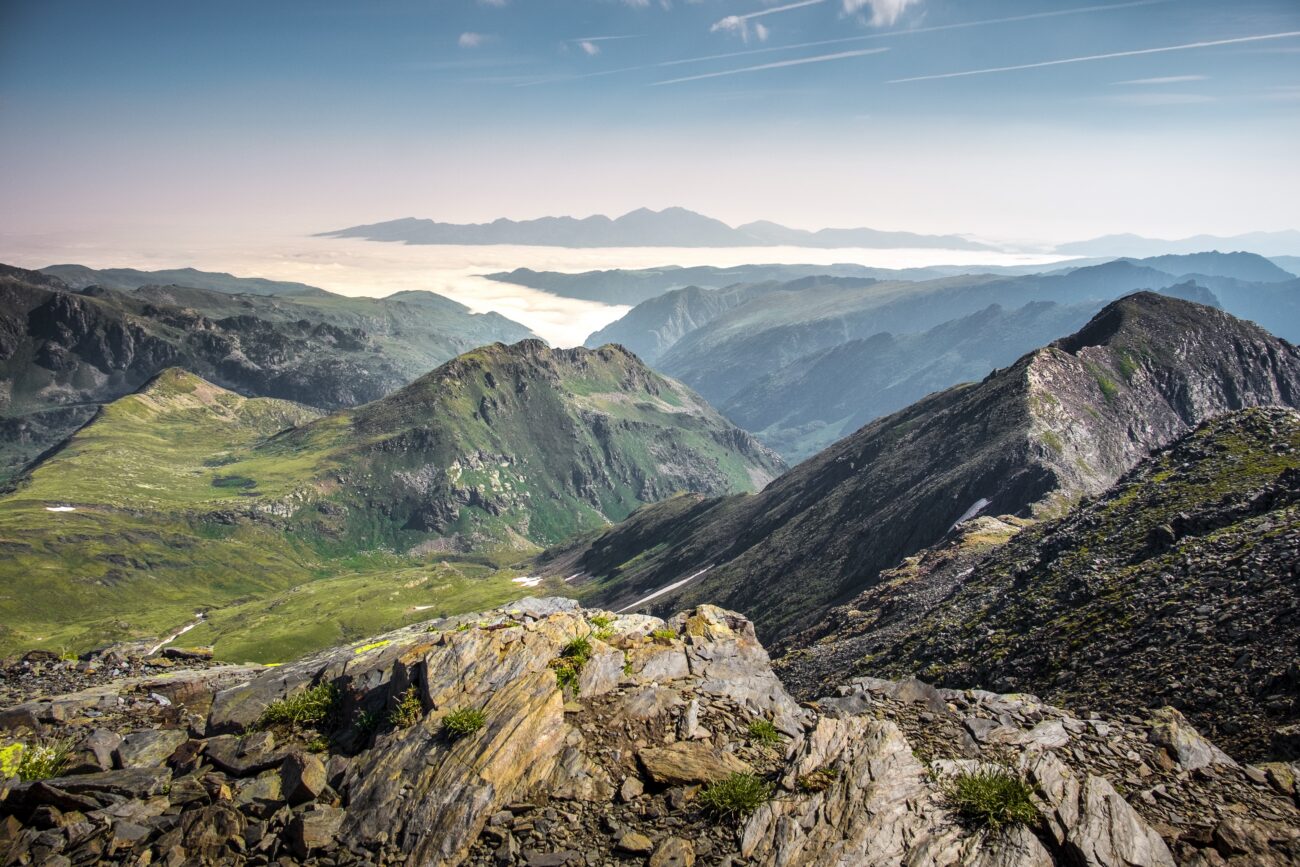
I haven’t driven Andorra myself yet, it’s firmly on the list; but the more research I do into it, the more it looks like one of the more overlooked driving destinations in Europe, and it’s worth making the case for before it inevitably gets discovered properly.
Ask most people to name a European driving destination and you’ll get the same handful of (good) answers; the Alps, the Dolomites, maybe the Pyrenees if they’re paying proper attention. Almost nobody says Andorra. Squeezed between France and Spain, all 468 square kilometres of it, this tiny principality punches well above its weight for mountain roads, and by most accounts carries considerably less traffic on its high passes than its Alpine neighbours, largely because most visitors are there to ski or shop rather than drive.
Why it looks worth the detour
Andorra sits entirely within the Eastern Pyrenees and has an average elevation of just under 2,000 metres, even the capital, Andorra la Vella, is the highest capital city in Europe. That density of altitude packed into such a small country is the whole appeal: you’re not driving for hours to reach one big pass, you’re surrounded by high mountain roads more or less from the moment you cross the border.
The headline road is the Port d’Envalira, which at 2,408 metres is the highest paved pass in the entire Pyrenean range and the main route between Andorra and France. It’s also, by most driver and cyclist accounts, a genuinely busy road for much of its length – it doubles as Andorra’s principal highway, so don’t go in expecting an empty ribbon of tarmac; the traffic reportedly thins out toward the summit but is a real factor lower down. There’s a toll tunnel beneath the summit (the Túnel d’Envalira, around €8 for a car) that runs year-round and is the only sensible option once the pass itself closes for winter, typically from late autumn until early summer.
Beyond the Envalira, the network of roads up into the smaller valleys, toward Ordino and El Serrat in particular, reportedly offers quieter, tighter driving with less through-traffic, since they don’t lead anywhere beyond themselves. Worth building time in for exactly that reason, though I’d treat any specific route recommendation here as one to verify locally or via a current map before committing a day to it, rather than take my word for.
Getting there
From France: the standard approach is via Toulouse and Foix on the N20, continuing through L’Hospitalet-près-l’Andorre and over the Port d’Envalira (or through the tunnel) into Pas de la Casa. This is the more toll-free option south of Pamiers.
An alternative from further east runs via Montpellier on the A9/A75 motorway network before joining the same approach.
From Spain: the standard route runs from Barcelona on the C-16 through the Cadí Tunnel, one of Spain’s longer road tunnels – into the Cerdanya valley, then on to La Seu d’Urgell before a short climb over the border into Andorra via the N-145/CG-1. It’s roughly a two-and-a-half to three-hour drive from central Barcelona depending on traffic, and by most accounts a genuinely scenic one in its own right, particularly through the Cerdanya plateau.
Andorra is not in the EU or the Schengen area, but in practice there are no routine passport checks at either border for those arriving from France or Spain (both Schengen members) though customs spot-checks do happen, particularly around duty-free allowances, and it’s sensible to carry ID or a passport regardless.
How long to plan for
Given the country is roughly 30 kilometres at its longest point, you could technically “do” Andorra in a single long day. I wouldn’t. The value here is in slowing down on roads most people just transit through, three to four days seems the sensible minimum to actually explore the valleys properly, get up into the higher, quieter roads, and still have time for the principality’s other draws (the spa culture, in particular, is a genuine feature, not a footnote). If you are coming from the UK, given Andorra’s location I would suggest pairing this with a Spain trip, Basque country, or the South of France.
If you’re combining it with a wider Pyrenean loop into French or Spanish passes either side, a week built around Andorra as a base starts to make real sense.
Practicalities worth knowing before you go
Winter tyres or snow chains are a legal requirement on mountain roads during winter conditions, and enforcement is reportedly taken seriously- arriving without them in marginal weather risks both a fine and being turned back at the border.
The Port d’Envalira closes seasonally. When it does, the Túnel d’Envalira becomes the only route through, so plan accordingly if you’re relying on the pass road itself for the views.
Andorra la Vella’s main corridor gets properly congested on weekends and holidays, largely from day-tripping duty-free shoppers crossing from both Spain and France. Friday afternoons and Saturday mornings are apparently the worst of it; worth avoiding if you’re just passing through rather than shopping.
Fuel and certain goods are meaningfully cheaper thanks to Andorra’s tax status, which is a pleasant side benefit of a stop here even if it’s not the reason you came.
The currency is the euro, despite Andorra sitting outside the EU. One less thing to think about!
My honest caveat
I’m recommending this on the strength of research rather than personal experience, and I’ll say so plainly: nothing here replaces checking current road and weather conditions before you go, particularly around the Envalira’s seasonal closures and winter tyre requirements.
If anyone in the community has actually driven it, especially the smaller valley roads toward Ordino and El Serrat, I’d genuinely like to hear how it compares to the case made above. Drop it in the WhatsApp group. If you aren’t already a subscriber to the Touring Standard and the Whatsapp group that goes with it, you can join here.
