
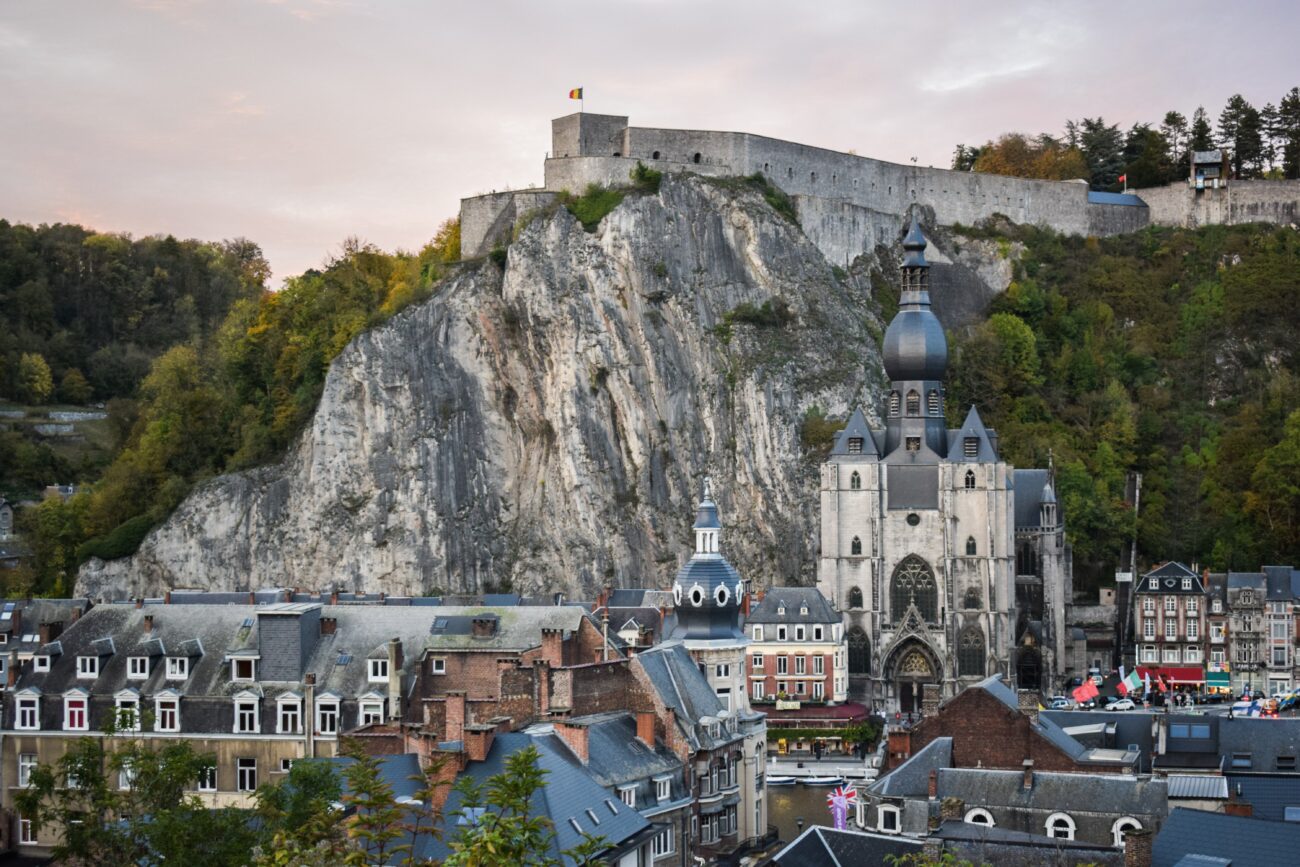
Ask most British drivers where their ‘fun car’ is going this summer and France will come up long before Belgium does. It’s an odd blind spot. Within three hours of the Channel ports sits a country with the road density of a driver’s paradise, forest roads that would not look out of place in the Eifel or the Vosges, a highest point that makes its own weather, and a culture stitched together from three languages and three national identities. Belgium doesn’t get talked about, as we tend to head due south towards the Alps, southern France and Italy/Spain. I think this is missing a huge opportunity to visit an amazing country.
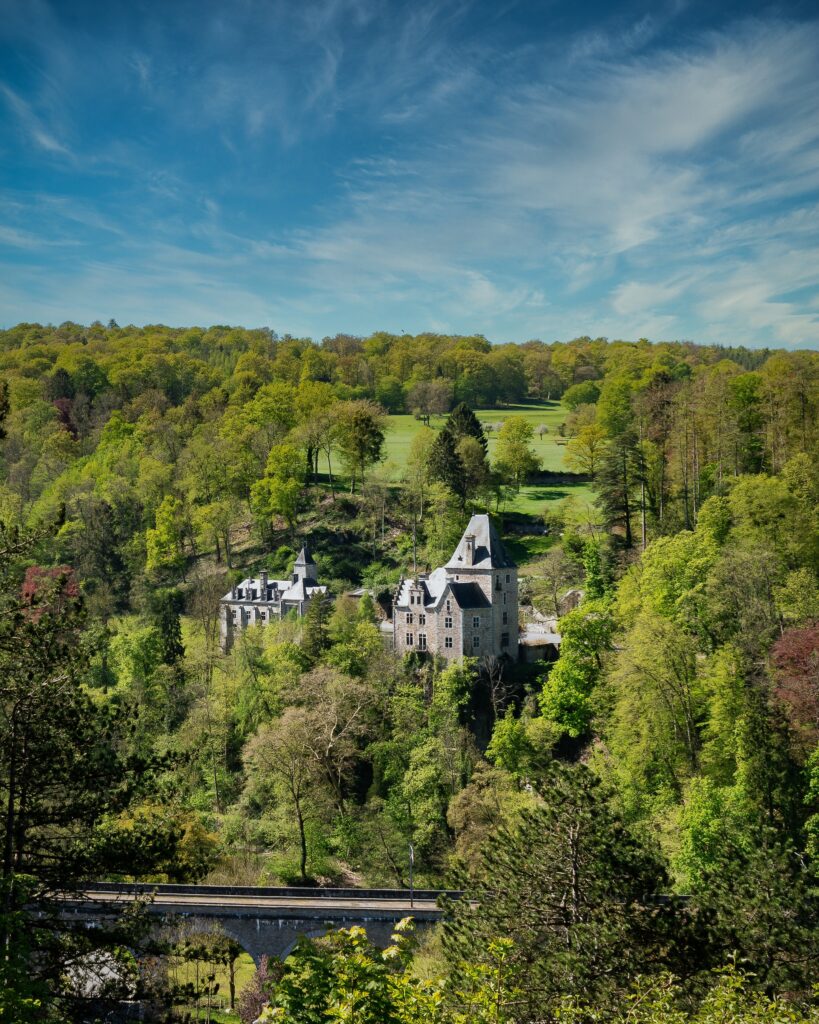
Overshadowed, not outclassed
France has spent decades building the mythology; the Alps, the Route Napoléon (which to be fair, is exeptional), wine regions with centuries of marketing behind them. Belgium has never bothered to the same degree, so it gets filed under “a country you drive through,” the layover between the Eurotunnel and wherever the trip is really headed. That reputation does it a disservice, in my opinion. Belgium has no Mont Blanc, granted, but it has the Ardennes: proper granite hill country, forest roads that twist for hours, and towns most British drivers have never heard of. Underrated, in this case, is really just under-marketed- the driving and the scenery hold up perfectly well without the brand recognition attached.
Much closer than you think
The practical case starts with geography. From Calais, the Ardennes is under three hours away; from a Hook of Holland or Zeebrugge crossing, it is closer still. There’s none of the long slog south that a proper Alpine or Provençal trip demands before the interesting driving even starts, within a morning of leaving the ferry terminal you’re already on forest roads and into cobbled market squares. For a long weekend, or as the opening two days of a bigger European run, Belgium earns its keep simply by being so easy to reach.
Roads built to be driven!
Belgium’s road network is dense and, for the most part, well surfaced. The motorways are toll-free and the secondary N-roads through the Ardennes are proper driving roads: narrow, well cambered, and largely free of the tourist traffic that clogs the Dordogne or Tuscany in August. Drop off the motorway south of Liège and the roads start climbing and doubling back through forest almost immediately. None of it is spectacular in the ‘Stelvio’ sense, there are no high alpine hairpins here, but it rewards a car that likes to be driven properly rather than cruised, and there’s a lot of it: hundreds of km’s of genuinely good roads packed into a country you could otherwise cross in half a day.
Forest, ridge and weather that turns on you
The Ardennes doesn’t fit the flat, tidy image most people carry of Belgium. It’s dense beech and pine forest cut through by the Meuse, the Semois and the Ourthe, rising toward the country’s own high plateau near the German border, the Hautes Fagnes or High Fens (in English), a peat moorland that tops out at 694 metres at the Signal de Botrange, Belgium’s highest point. That elevation is enough to make its own weather: mist forms over the fens with little warning, rain moves through fast, and then the light comes back hard through the trees. It’s not always comfortable, but it’s rarely dull; the kind of variable weather that makes a driving road feel like a different place on the way back than it did on the way out. Pack for all four seasons in one afternoon. This also applies if you venture into Belgium’s valleys, such as going to see Spa Francorchamps (highly recommended).
A country built from three cultures
The more interesting story is what’s happened to Belgium’s identity. It isn’t one culture, it’s three, folded into a country smaller than Wales: Dutch-speaking Flanders in the north, French-speaking Wallonia in the south, and a German-speaking Community tucked against the German border in the east, a legacy of territory ceded after the First World War. Drive east through the Ardennes and the road signs quietly switch language twice. Architecture shifts from Walloon stone farmhouses to half-timbered Rhineland townhouses. Menus move from moules-frites to Sauerbraten. It’s Belgium filtered through France, Germany and the Netherlands all at once, and nowhere is that more obvious, or more charming, than in the towns of the east.
Malmedy: the stop worth building a day around
Malmedy sits right inside that German-speaking pocket, on the Warche river, and does a genuinely good job of being a small town with a real story. Heavily bombed in December 1944 and rebuilt largely in local stone, it now hosts Cwarmê, one of Belgium’s oldest carnivals, a Walloon-dialect festival, recognised by UNESCO, staged in a town where the everyday language is German. It’s also the natural gateway into the Hautes Fagnes nature park, which makes it work as a base rather than just a photo stop: coffee and a walk on the fens in the morning, forest roads in the afternoon. Nearby Spa is worth the detour too- the town that gave the word “spa” to the English language, and a short run from the public roads around Spa-Francorchamps, which have exactly the elevation and rhythm you’d expect from a circuit’s back yard.
The Ardennes’ best driving roads
The N62 south of Malmedy is the one to build a route around. It leads you towards the Hautes Fagnes past Baraque Michel, the highest road in Belgium, with long open sightlines across the fens before it drops back into forest. Further south and west, the roads around Bouillon and Dinant reward a slower pace: the N95 loops out of Dinant toward Rochehaut with proper vantage points over the Semois valley, and a run through the Forêt de Chiny on the N85 and N88 stays under tree cover for long stretches, tight enough to keep both hands busy. None of these roads will show up on a “great driving roads of Europe” list, which, again, is rather the point. They’re empty, well kept, and entirely yours.
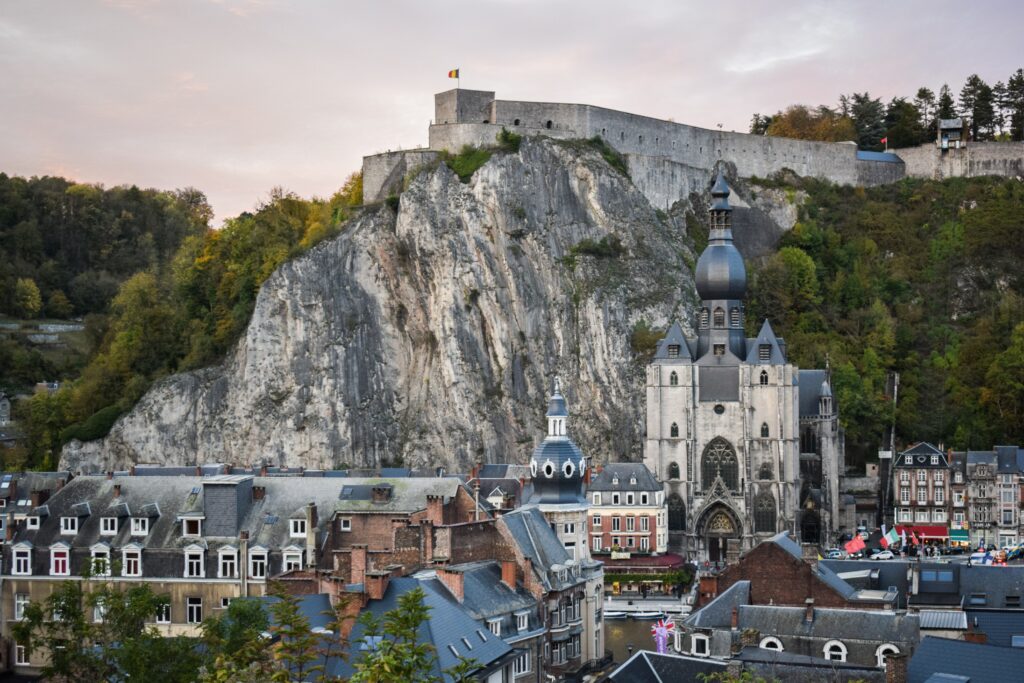
Plotting your route
Part of the fun of road tripping and exploring, is the route planning. However, sometimes it can be difficult to know where to start. With that in mind, my suggestion is to start with this loop of some of the towns mentioned in this article. From here, find the good roads (check out the Michelin Belgium map to assist) and adjust to your own timescales and preferences.
Most important of all, join the Touring Standard and let us know how you got on!
In summary…
France will always get the headline. But for a country you can reach before lunch, with roads this good, weather with real character, and a culture split three ways in a space smaller than most English counties, Belgium does not deserve its reputation as the place you drive through. Next time, make it the destination.
