
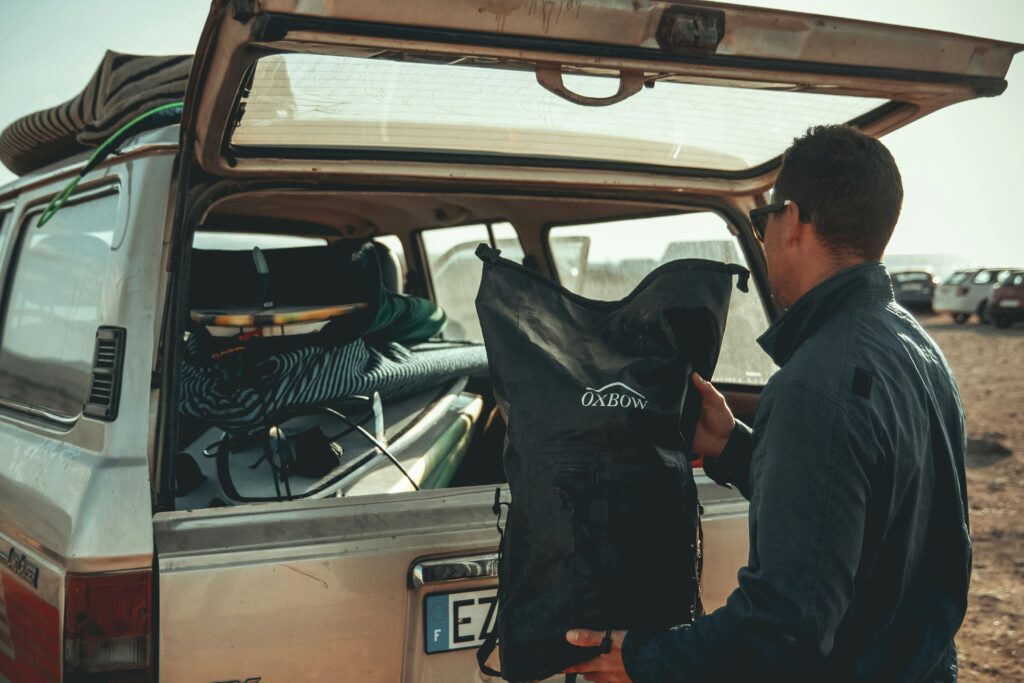
Whether you’re piloting a vintage VW campervan, a 1960s Mustang, or a modern Ferrari, one thing’s for sure: packing smart can make the difference between a smooth ride and a roadside facepalm of “I can’t believe I forgot that!”. Fear not, road warrior – we’ve got the ultimate packing guide to ensure you and your car are ready for anything. From essential tools to creature comforts, here’s how to pack for perfection. You can find an expanded list of kit and other tips too, in this blog post.
Plan for the Car, Not Just the Driver
This is possibly the best tip I can give. Think about the car first- it is your transport and your route home. It is also generally easier to buy things en route for people, than for specific makes of car. Also, road trip kit for a regular car is one thing, but for classic and exotic cars, we need to think a bit differently. These special rides often have unique needs, so think carefully about what your specific car needs.
The Kit List
All the items here are things we have either used or researched extensively. If you think we have missed anything, let us know here.
Tool kit: Get a compact tool roll or box with screwdrivers (flat & Phillips), pliers, socket set, cable ties, duct tape (the universal savior), and a multitool. If you’re in a classic, toss in a hammer (sometimes a gentle tap can free a stuck part – very scientific, we swear). If you don’t yet have one, this is a good place to start.
Spare Parts: Tailor this to your car. For classics, consider packing belts (fan belt, etc.), a spare set of spark plugs, points/condenser (if your car is old-school enough for a distributor), and fuses. A small can of WD-40 (try this one) and some spare bulbs for headlights/taillights are great too.
Fluids: A litre of oil, a couple of litres of premixed coolant, maybe some brake or power steering fluid. Older cars can sip a bit of oil over long distances; exotics might too if you’re pushing them hard. Also include a funnel and some rags. Check the oil is right for your car! Another pre-trip tip: get to know where stuff is -oil filler cap, locking wheel nut, warning triangle.
Tyre Kit: Even if you have a spare tyre (check it’s inflated!), also carry a tyre repair kit and a portable air compressor. For exotics without a spare, this is crucial – a can of tyre sealant/inflator can be a trip-saver until you find a proper fix. Holt’s is my preferred one, on sale here.
Jumper Cables or Booster Pack: Classics sometimes have ageing batteries; exotics sometimes sit in garages and might have a surprise dead battery. A lithium-ion jump starter pack is compact and can jump your car without needing another vehicle – very handy. Check you have the right one for your size of engine. This one is my suggested pick.
Gloves and Work Light: Pack a pair of work or disposable gloves and a good torch or head torch for any night time emergencies. Tip: smartphone torches are OK for some things, but poking around underneath a car is not one of them.
Car Manual: If you have it, bring the owner’s manual or a digital copy. That way if some cryptic warning light comes on, you’re not guessing what it means. It can also be very useful if you are talking to a mechanic in a different country who may not be too familiar with your car. A translation app with an image translation service can sort out any language barriers.
Navigation: You probably have a smartphone with Google Maps or Waze, but also consider a dedicated GPS device or offline maps (download maps to your phone in case you lose signal). For classics without USB ports, bring a 12V adapter or an external battery pack. Having a battery pack with a lot of capacity is really useful for the longer trips. For maps, go for Michelin maps. The colour coding makes route planning much better. Here’s the map for France, and this is for Germany.
Dash Cam / Camera: Documenting your epic drive? A dash cam or a GoPro can capture stunning footage of those alpine passes. Plus, a dash cam can be useful for insurance if anything happens. I’m still reviewing these so no recommendation just yet, but if you have had a good experience with any specific kit, let me know here.
Chargers & Mounts: Pack charging cables (bring extras, they love to hide or break), a phone mount for the dash or windshield (so you’re not fumbling with your phone while navigating), and maybe a multi-port USB charger if you have several devices. My personal suggestion is here- I have two!
Portable Wi-Fi or SIM: If you need to stay connected, consider a portable hotspot or at least a local SIM card for data in each country – especially if you’ll use navigation and music streaming a lot or if your trip is quite long in duration.
Sunglasses & Sunscreen: Driving all day, you’ll get a lot of sun through that windshield (and even more in a convertible). Protect your eyes and skin – nobody wants a “driver’s tan” (one arm cooked, the other not) or sunburned knees. Another key tip is to use scalp sunscreen (yes, that is actually a thing). Makes the world of difference. My preferred one is here.
Driving Gloves: A bit of personal preference. If you’re in a classic with a skinny wooden steering wheel, a pair of driving gloves not only looks the part but also helps grip and comfort. Even in exotics, some like gloves to avoid sweaty palms when driving spiritedly. Not everyone’s cup of tea but with the right car, these can really add to the experience. My personal favourites are here.
Wet Wipes & Paper Towels: Sticky fingers from that Nutella crepe you grabbed in a French village? Spilled coffee during an enthusiastic launch from the toll booth? Wet wipes to the rescue. Also good for a quick face refresher on long days. My preference are here– better to have several small packs than one large one that will dry out!
Soft-sided bags: Ditch the hard suitcases. Use duffel bags or soft luggage that can squish and mould to available space. Much easier to fit in that irregular boot space of a classic or the frunk of a supercar, or even on the back seats. The best option depends on how much space you have and how long your trips tend to last. I’d opt for this if space allows (with wheels), or this if space is at a premium.
Reflective/hi vis Vests: Many countries (France, Italy, Spain, etc.) require a high-vis vest for each occupant, stored within reach (not in the boot) to wear in case of breakdowns. Pack a couple of these; they fold small. These ones look great.
Warning Triangle: If your car didn’t come with one, get a collapsible triangle to set out if you break down. It’s law in many places, and here is my suggested one.
First Aid Kit: Also required in some countries (like Germany). Even if not, it’s smart to have plasters, antiseptic, etc., for minor issues. My suggested kit is here. Better to go bigger here than skimp and regret it.
Fire Extinguisher: Required in a few countries (and by some car clubs for events). A small automotive fire extinguisher could be useful – classics especially, with older wiring or fuel systems, can be a tad more flammable (knock on wood you’ll never need it). Go for a reputable brand such as this one.
Breathalyzer (France): France used to require drivers carry a breathalyzer kit in the car. They don’t really enforce it now, but kits are cheap and small – up to you if you want to toss one in. These are the ones you need.
Documentation Stickers: If you’re coming from the UK, you might need a “UK” sticker on your car now (post-Brexit rules) when driving in the EU. And if your car is older and doesn’t have EU-style license plates with country code, you’ll need that country code sticker. Also check on low-emission zone stickers (like the Crit’Air vignette for French cities or similar in Germany) if you plan to enter certain cities. The magnetic ones are best, here.
Have I missed anything? Let me know!
This page contains affiliate links- this helps support the website and we receive a small commission, if you make a purchase. Please consider supporting us.