
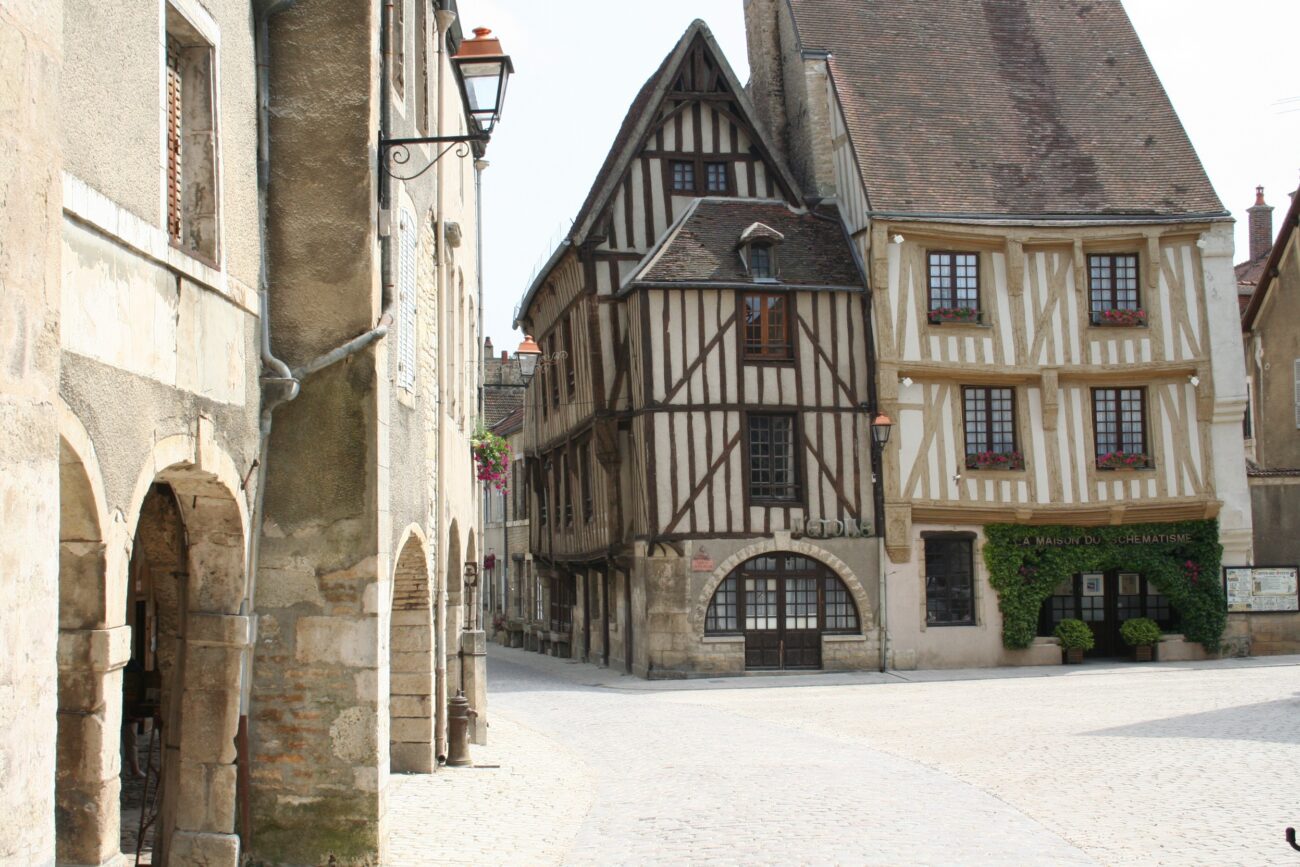
Most people driving south through France treat Troyes the way they treat a motorway services -somewhere to exist for 20 minutes before getting back to the business of covering distance. That’s a real shame. Also, if you look at a map properly, it’s a bit of a missed opportunity. Troyes isn’t just a pleasant medieval town that happens to sit near a motorway. Instead, it’s sitting almost exactly where you’d want it to be if you were designing the ideal staging point for a road trip south. I have used this town as a stopover many, many times, for good reason.
Why the geography actually matters
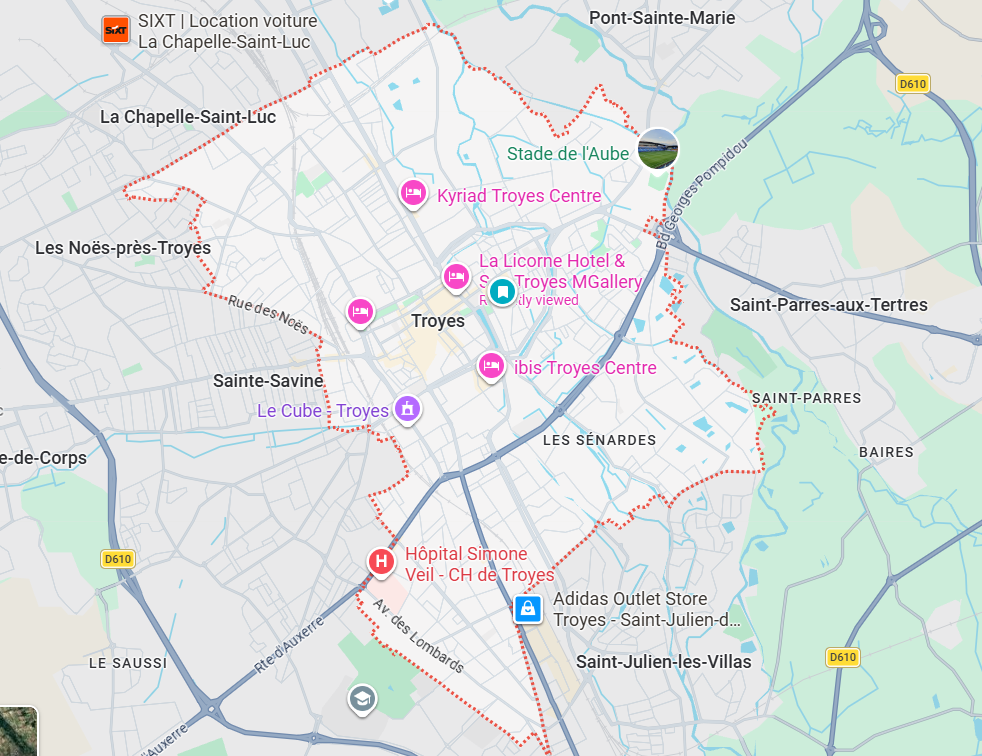
Troyes sits at the point where the A26- the motorway that runs down from Calais, through Reims, and past the Ardennes, meets the A5. The A5 continues on toward Dijon, Lyon, and the Alps. If you’re driving down from the Channel ports, from Belgium, or from the Netherlands, heading toward Burgundy, the Alps, the Riviera, or onward into Italy or Switzerland, there’s a very good chance your route already takes you within a few kilometres of Troyes. You might not even realize it.
It’s also a sensible distance from Paris, around 175km, call it two and a half hours down the A5. Therefore, it makes it a realistic first-night stop if you’re starting a longer tour from the capital. This is a better option rather than trying to push straight through to Burgundy or beyond on day one.
Compared with the usual first-night options clustered closer to Paris, Troyes gets you a proper chunk of distance covered while still leaving you somewhere genuinely worth stopping in. Instead of a services hotel with nothing around it, you get something worth visiting.
The old town: more than a photo stop
The historic centre of Troyes is often described as being shaped like a champagne cork when viewed from above, appropriate, given this is the historic capital of the Champagne region. It’s also compact enough to properly explore on foot in an afternoon without feeling rushed.
What you’re actually looking at is one of the best-preserved concentrations of half-timbered, Renaissance-era townhouses in France, in a genuinely striking range of colours – ochre, rose, pistachio, deep raspberry – that most people associate with Alsace rather than Champagne.
Most of what you see dates from after a catastrophic fire in 1524 that destroyed roughly a quarter of the city. The wealthy merchants who rebuilt did so properly, in a style that’s held up remarkably well five centuries on.
A few specific things worth building time around:
- The Ruelle des Chats, one of the narrowest medieval alleys left in France, so tight the upper floors of the houses on either side very nearly touch.
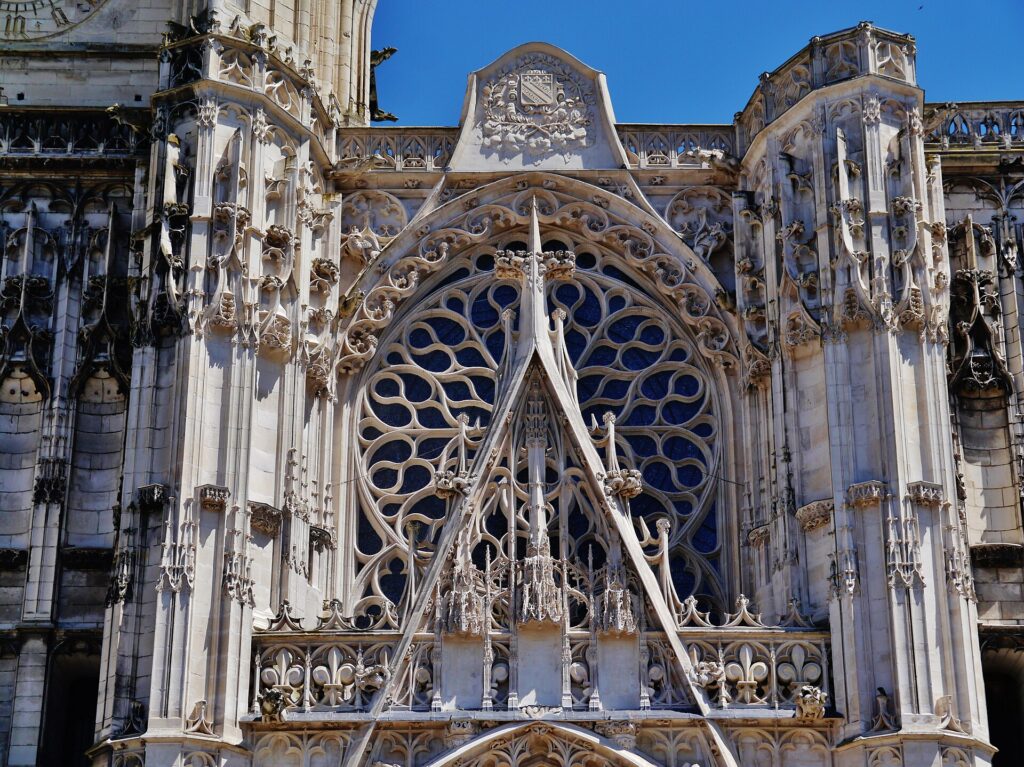
- Troyes Cathedral (Saint-Pierre-et-Saint-Paul) and the Basilique Saint-Urbain, both known for genuinely exceptional stained glass – Troyes has a long-standing reputation as something of a French capital for the craft, and the quality shows.
- The Hôtel de Mauroy, a former guild house and one of the most impressive half-timbered buildings still standing, now home to a museum dedicated to historic trades.
- Simply wandering the Saint-Jean district without a fixed plan. This is a town that rewards getting pleasantly lost for an hour more than it rewards a checklist.
Champagne, without the Épernay crowds
Troyes sits at the southern edge of the Champagne region, in an area known as the Côte des Bar – considerably less visited than the grander houses around Reims and Épernay further north, and arguably a more interesting stop for exactly that reason. This is where a large proportion of the region’s Pinot Noir actually comes from. It feeds into the bigger houses further north. But a growing number of smaller, independent producers here are making genuinely excellent Champagne under their own names. These producers are far easier to visit without a scheduled group tour. Champagne Drappier, based in the village of Urville a short drive south of the city, is one of the better-known names to look up if you want a proper cellar visit without the crowds.
Treat this as an easy half-day out from Troyes rather than a full detour — the vineyard roads through the Côte des Bar are gently rolling rather than dramatic. However, they’re a genuinely pleaant, unhurried way to spend a morning with the roof down. Then you can head back into town for lunch.
The lakes, for something completely different
A short drive east of Troyes brings you to the Forêt d’Orient Regional Nature Park, built around three large artificial lakes — the largest, Lac d’Orient, was created to help regulate the Seine and prevent flooding downstream in Paris, and has since become a genuinely scenic spot for a detour, ringed by forest and popular with birdwatchers and sailors in the warmer months. It’s not a driving destination in the way a mountain pass is. However, as a change of pace from cobbled old-town streets and vineyard lanes, a loop out through the forest roads around the lake is a pleasant couple of hours. It’s also a good excuse to actually stretch a stay in the area to two nights rather than one.
The outlets, briefly
Troyes is, slightly unexpectedly, one of the biggest factory outlet destinations in France – a legacy of the city’s textile manufacturing history, and home to brands including Lacoste and Petit Bateau. McArthur Glen Troyes, built as a village of half-timbered-style buildings just outside the centre, is the largest of several outlet centres in the area. I know, I know, it’s not why you’re here. Still, if travelling companions need an hour of retail therapy while you’d rather be looking at architecture, it’s a genuinely good one to have nearby.
Where to stay
For a comfortable, well-located base with genuinely secure parking, the Mercure Troyes Centre is the one to book; a recently renovated 4-star sitting five to ten minutes’ walk from the old town. It has secure underground parking (worth the modest daily charge without question if you’re bringing something you’d rather not leave on the street overnight), EV charging points, and a champagne bar on-site for exactly the kind of low-key evening this town is built for. It’s a reliable, no-nonsense choice that consistently gets the basics right. That’s really what you want from a stopover base.
If you’d rather make a proper night of it and stay somewhere with a bit more occasion, La Licorne Hotel & Spa Troyes (MGallery Collection) is the upgrade – a five-star property right in the old town, with a heated pool, spa, and the option of vineyard tours arranged through the hotel. Private parking is available but at a premium. So weigh that against the Mercure if security and cost matter more to you than turndown service.
The honest case for stopping here
Troyes isn’t a headline destination in the way the Alps or the Dordogne are, and nobody’s suggesting you build an entire trip around it. But as a genuinely well-positioned waypoint, sitting exactly where a north-south crossing of France naturally wants to break, it does something a motorway hotel never can. It turns a necessary overnight stop into a proper, memorable evening. One night gets you the old town and dinner. Two gets you the Côte des Bar and the lake as well. This turns a stopover into a small destination in its own right.
Used Troyes as a stopover before? Or found somewhere better along the A5/A26 corridor? Let us know in the WhatsApp group — this is exactly the kind of route intelligence worth pooling.
Drive safe, and get out there!
